
Key Takeaways
- PRP for herniated disc is an emerging regenerative treatment with promising early evidence, but research is still developing.
- PRP does not mechanically push a disc back into place. Its proposed role is to influence inflammation, pain, and tissue-repair processes.
- Patient selection is critical because back pain, disc-related pain, and nerve-related pain may require different treatment strategies.
- Avid Sports Medicine combines physician-directed regenerative medicine with physical therapy and therapeutic exercise so PRP, when appropriate, becomes part of a broader recovery plan.
A herniated disc can affect much more than the back.
For some people, the main symptom is localized low back pain. For others, irritation around a spinal nerve can lead to pain traveling into the buttock or leg, along with tingling, numbness, or weakness. Symptoms may make sitting uncomfortable, interfere with sleep, limit exercise, or make previously normal activities feel uncertain.
Most people understandably want to know what can be done without immediately moving toward surgery.
Physical therapy, activity modification, medication, and other non-surgical treatments often form the first stage of care. In more persistent cases, injection therapies may also enter the conversation. One option that has received increasing attention is platelet-rich plasma, commonly known as PRP.
PRP for herniated disc is still an emerging treatment area. Research is developing, and it does not have the same level of established evidence for disc-related pain as some of the tendon and joint conditions for which PRP is more commonly used. However, early studies suggest that carefully selected patients may experience improvements in pain and function.
The key is understanding what PRP can realistically do, which type of disc-related problem is being treated, and how regenerative treatment fits into a broader recovery plan.
Start With What A Herniated Disc Actually Is
The discs between the vertebrae help absorb load and allow the spine to move. Each disc has a softer inner portion surrounded by a tougher outer layer. When part of the disc pushes outward through a weakened or damaged area, it is commonly described as a herniated disc.
A herniated disc does not automatically cause pain.
Some people have disc changes on imaging without significant symptoms. Problems are more likely when the disc itself becomes painful or when nearby nerve tissue becomes irritated or compressed.
That distinction is important because treatment should be aimed at the source of the symptoms rather than simply an MRI finding.
Someone with mostly back pain may have a different treatment plan from someone whose primary problem is shooting leg pain. A person with mild symptoms and good strength may also need a very different approach from someone experiencing progressive neurological changes.
This is why the diagnosis comes before the injection.
Where PRP Fits Into The Conversation
PRP is made from the patient’s own blood. A blood sample is processed to concentrate platelets, which contain growth factors and signaling proteins involved in tissue repair and inflammation regulation.
The concentrated PRP is then delivered to a carefully selected treatment area.
For disc-related conditions, PRP has been studied using different injection approaches. Some research has looked at intradiscal injections, where PRP is delivered into the affected disc. Other studies have explored epidural or targeted injections around irritated spinal nerve structures. These are not interchangeable procedures.
The target depends on the diagnosis, whether the main problem appears to be disc-related pain, nerve irritation, or another spinal structure. This is one reason PRP for herniated disc should be physician-directed rather than viewed as a generic injection for back pain.
PRP Does Not Push The Disc Back Into Place
One misconception worth clearing up early is that PRP mechanically repairs a herniated disc or pushes the disc back into its original position. That is not how the treatment works.
PRP is being studied for its potential biological effects on pain, inflammation, and tissue repair. The goal is to influence the environment around damaged or irritated tissue rather than physically reposition the disc. This distinction matters because realistic expectations are essential.
A successful outcome does not necessarily mean that the disc looks completely normal on imaging. A more meaningful goal may be reduced pain, better function, improved tolerance for sitting and exercise, and a return to activities that had become difficult.
Why PRP Is Being Studied For Disc Problems
Discs have a relatively limited blood supply compared with many other tissues in the body. That can make healing complex.
Researchers are therefore interested in whether concentrated platelet products can help influence inflammatory signaling and tissue repair within or around a painful disc.
Early studies have reported encouraging results in some patients, particularly in measures of pain and disability. However, the research remains relatively small compared with more established treatments, and PRP preparation methods, injection techniques, and patient selection vary considerably between studies.
That means PRP should currently be viewed as a possible option for selected patients rather than a standard solution for every herniated disc.
Back Pain And Sciatica Are Not The Same Problem
A herniated disc may produce primarily low back pain, primarily leg pain, or a combination of both. When a spinal nerve is irritated, symptoms may travel along the nerve into the buttock, thigh, calf, or foot. This is often referred to as radicular pain or sciatica. The treatment decision should reflect that difference.
If nerve irritation is the dominant problem, the injection target and treatment strategy may be different from a situation where the disc itself appears to be the main source of pain. This is also why simply asking, “Does PRP work for herniated discs?” does not have a simple yes-or-no answer.
A better question is, “What structure appears to be causing my symptoms, and is PRP a reasonable treatment for that specific problem?”
Who Might Be Considered For PRP?
PRP may be discussed when symptoms have persisted despite a well-structured period of conservative care and when the diagnosis is clear enough to justify a targeted regenerative approach.
A patient being considered for PRP may have already tried physical therapy, activity modification, strength work, and other appropriate non-surgical strategies without getting enough improvement.
Other factors also matter, including the location and severity of the disc problem, the type of symptoms, imaging findings, overall health, previous treatments, and the patient’s goals.
PRP is generally more meaningful when there is a specific clinical reason for choosing it rather than simply because someone has back pain.
Who May Need A Different Approach First?
Not everyone with a herniated disc is a candidate for PRP. Some patients improve significantly with rehabilitation alone. Others may need medication, a different type of injection, or further diagnostic testing before regenerative treatment is considered.
There are also situations where more urgent medical evaluation is important. Progressive weakness, significant loss of sensation, or changes in bladder or bowel control should not be treated as routine back pain.
In those situations, the priority is appropriate medical assessment rather than waiting to see whether an injection helps. PRP should sit within a broader clinical decision-making process.
Physical Therapy Still Matters
Even when PRP is used, rehabilitation remains important. A disc-related problem can lead people to move differently. They may avoid bending, reduce activity, brace excessively, or rely heavily on the other side of the body. Over time, fear of movement can become almost as limiting as the original pain.
Physical therapy helps restore confidence and capacity. For some patients, treatment may focus on improving hip and trunk strength, spinal control, mobility, lifting mechanics, and tolerance for sitting or standing. Others may need a gradual return to running, gym training, cycling, or sport.
The exact exercises should reflect the patient’s symptoms rather than follow one universal “herniated disc routine.”
PRP may help create a better environment for recovery, but the body still has to relearn how to move and tolerate load.
The Goal Is Function, Not Just A Better MRI
Patients understandably pay close attention to imaging. An MRI can be useful, particularly when symptoms suggest nerve involvement or when conservative treatment has not produced enough progress. But imaging is only one part of the picture.
Recovery should also be measured by what the person can do.
- Can you sit through a workday more comfortably?
- Can you walk farther without symptoms?
- Can you return to strength training?
- Can you sleep without waking because of pain?
- Can you lift, bend, run, or play your sport with more confidence?
These changes often matter more to patients than whether every structural finding on an MRI has disappeared.
What Happens During PRP Treatment?
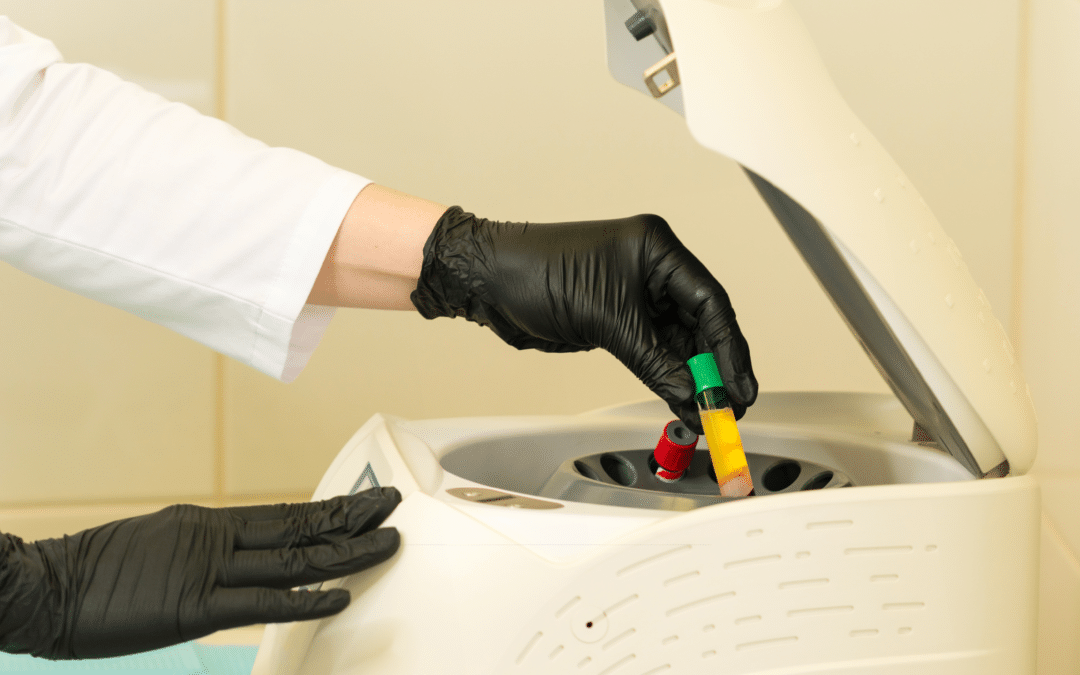
PRP begins with a blood draw. The blood is then processed in a centrifuge to separate and concentrate the platelet-rich portion. That preparation is used for the injection.
Spinal PRP procedures require careful planning because the anatomy is complex and the treatment target needs to be precise. The approach used for an intradiscal injection is different from an injection intended to address radicular symptoms.
Patients should understand what structure is being targeted, why it has been chosen, and what evidence supports that approach.
PRP should not be delivered simply to the general area where pain is felt.
What Recovery After PRP May Look Like
PRP is not typically considered an instant pain-relief procedure. Some people may experience temporary soreness after treatment. Improvement, when it occurs, often develops gradually because the treatment is intended to influence biological processes rather than numb the area immediately.
The recovery plan may involve temporary activity modification followed by progressive rehabilitation.
The exact timeline depends on where PRP was delivered, what condition is being treated, how severe symptoms are, and how the patient responds.
This is another reason the injection and rehabilitation plan should be coordinated.
PRP Compared With Steroid Injections
Steroid injections and PRP are often compared because both can be used in injection-based treatment for spinal pain, but they work differently.
Corticosteroid injections are primarily intended to reduce inflammation around irritated structures. They may provide relatively quick symptom relief for some patients, particularly when nerve inflammation is contributing to pain.
PRP takes a different approach. Instead of primarily suppressing inflammation, the goal is to use concentrated biological components from the patient’s own blood to support a healing response.
Current research comparing PRP with epidural steroid injections for lumbar radicular pain is interesting but not definitive. Some studies suggest PRP may provide longer-lasting improvement in certain patients, while the overall evidence is still too limited to say that PRP should routinely replace corticosteroid injections.
The right treatment depends on the individual case.
Why Patient Selection Matters So Much
Regenerative treatments can sound appealing because they are associated with healing rather than simply symptom control. But the word “regenerative” should not replace careful diagnosis.
A patient with a mild disc herniation and improving symptoms may not need an injection at all. Someone with substantial neurological compromise may need another level of care. A patient with chronic low back pain may discover that the disc is not actually the main source of symptoms.
PRP makes the most sense when the treatment target is clear and there is a reasonable clinical basis for expecting benefit.
That is why Avid’s physician-directed approach matters. Regenerative treatment recommendations should follow evaluation rather than precede it.
A Complete Plan May Include More Than One Tool
Persistent back pain is rarely solved simply by adding more and more treatments.
The better approach is to identify what each part of the plan is supposed to accomplish.
For example, a comprehensive program might include:
- A sports medicine evaluation and review of imaging to clarify the diagnosis.
- PRP or another injection therapy when regenerative treatment is appropriate.
- Physical therapy and progressive strength work to restore movement, confidence, and function.
- Ongoing reassessment to determine whether symptoms and activity tolerance are actually improving.
These elements should work together rather than feel like unrelated appointments.
The purpose of treatment is not to collect procedures. It is to help the patient move forward.
What About Exercise After A Herniated Disc?
Many patients become nervous about exercise because they are afraid movement will make the herniation worse. Complete avoidance of movement is rarely the long-term answer.
Exercise should instead be matched to the stage of symptoms and individual tolerance. Some patients feel better with walking and controlled strength work. Others need a slower progression because nerve symptoms are easily irritated.
A physical therapist can help determine which movements are currently useful and which ones need to be modified.
As symptoms improve, exercise should gradually become more demanding. A person who ultimately wants to return to running, lifting, golf, tennis, or another sport needs a program that eventually prepares the spine and surrounding muscles for those real-world demands.
Strength Is Part Of Spine Recovery
Strong muscles do not make a disc herniation disappear, but they can improve how the body manages movement and load.
The trunk, hips, and legs work together during lifting, running, bending, and daily activities. Rehabilitation may therefore include exercises that improve trunk endurance, hip strength, balance, and control.
The goal is not to keep the spine rigid. It is to create enough strength and coordination that normal movement feels safe again.
For active patients, this progression can eventually include heavier resistance, faster movement, and sport-specific training when appropriate.
Why Long-Term Back Pain Needs A Broader View
When pain has lasted for months, it is easy for treatment to become focused entirely on the painful structure.
But persistent pain may also affect sleep, confidence, fitness, work tolerance, and overall activity.
Someone who has stopped exercising because of back pain may lose strength and conditioning. That loss can make returning to normal life more difficult even when the original irritation begins to improve.
A comprehensive sports medicine plan should therefore help the patient rebuild overall capacity, not only address the disc.
This is where the combination of regenerative care and rehabilitation can become particularly useful.
PRP For Herniated Disc At Avid Sports Medicine
At Avid Sports Medicine in San Francisco, regenerative medicine is physician-directed and built around individualized evaluation rather than a one-treatment-fits-all approach. Avid offers PRP as part of a broader sports medicine program and also treats patients with disc herniations and other movement-related conditions.
For someone considering PRP for herniated disc, the first step is determining whether the disc is actually responsible for the symptoms and whether regenerative treatment is appropriate. From there, the care plan may incorporate physical therapy, progressive therapeutic exercise, movement assessment, and other sports medicine services alongside injection-based treatment when indicated.
PRP for herniated disc is promising, but it is still an evolving treatment area. Patients deserve a conversation that includes both the potential benefits and the limitations of current evidence.
If persistent back or leg pain from a herniated disc is limiting your activity and conservative care has not provided enough improvement, schedule a consultation with Avid Sports Medicine. Our team can help determine whether PRP belongs in your treatment plan and build a recovery strategy focused on reducing pain, restoring movement, and getting you back to the activities that matter to you.
FAQ: PRP For Herniated Disc
Can PRP Be Used For A Herniated Disc?
PRP has been studied as a treatment for lumbar disc-related pain, including intradiscal and other targeted injection approaches. Early results are promising, but research is still developing.
Does PRP Heal A Herniated Disc?
PRP is intended to support biological healing and influence inflammation, but it should not be described as a guaranteed way to restore a herniated disc to normal anatomy.
How Does PRP For A Herniated Disc Work?
PRP is made from concentrated platelets taken from the patient’s own blood. The preparation is injected into a carefully selected treatment area with the goal of supporting repair and reducing pain.
Is PRP Better Than A Steroid Injection?
The treatments work differently. Steroids primarily reduce inflammation, while PRP is intended to support healing. Current evidence does not establish PRP as universally better for herniated disc or radicular pain.
How Long Does PRP Take To Work?
PRP generally does not provide instant relief. Improvement may develop gradually over several weeks or months depending on the condition and individual response.
Do I Still Need Physical Therapy After PRP?
Often, yes. Physical therapy can help restore strength, mobility, movement confidence, and activity tolerance while the patient progresses through recovery.
Can PRP Help Sciatica?
PRP has been studied for lumbar radicular pain related to disc problems, but evidence is still emerging. The cause of the sciatica should be accurately identified before treatment.
Is PRP For Herniated Disc Right For Everyone?
No. Patient selection is important, and some people may respond well to conservative rehabilitation while others may need different injections or surgical evaluation.
When Should A Herniated Disc Be Evaluated Urgently?
Progressive weakness, major changes in sensation, or new bladder or bowel dysfunction require prompt medical evaluation rather than routine conservative treatment.