
Key Takeaways
- Avid Athlete Studio combines a boutique gym environment with access to sports medicine, physical therapy, gait analysis, recovery services, and performance resources.
- The studio helps bridge the gap between rehabilitation and independent training, making it relevant for post-PT patients as well as healthy athletes and active adults.
- Members can access strength and conditioning equipment, movement screening, gait analysis, and the AlterG Anti-Gravity Treadmill within the same Avid ecosystem.
- Athlete Studio is designed around long-term movement, recovery, performance, and consistency rather than simply providing another place to exercise.
There is an awkward point in many fitness and recovery journeys. You may no longer need traditional physical therapy several times a week, but you do not feel completely ready to walk into a crowded gym and figure everything out alone. You may have recovered from an injury but still need to rebuild strength.
You may be training for a race but want to understand your running mechanics before increasing mileage. You may simply want to stay active as you get older without repeating the same cycle of pain, rest, recovery, and reinjury. Traditional gyms are built primarily around access to equipment. Medical clinics are built around treating health problems.
Avid Athlete Studio brings those worlds together.
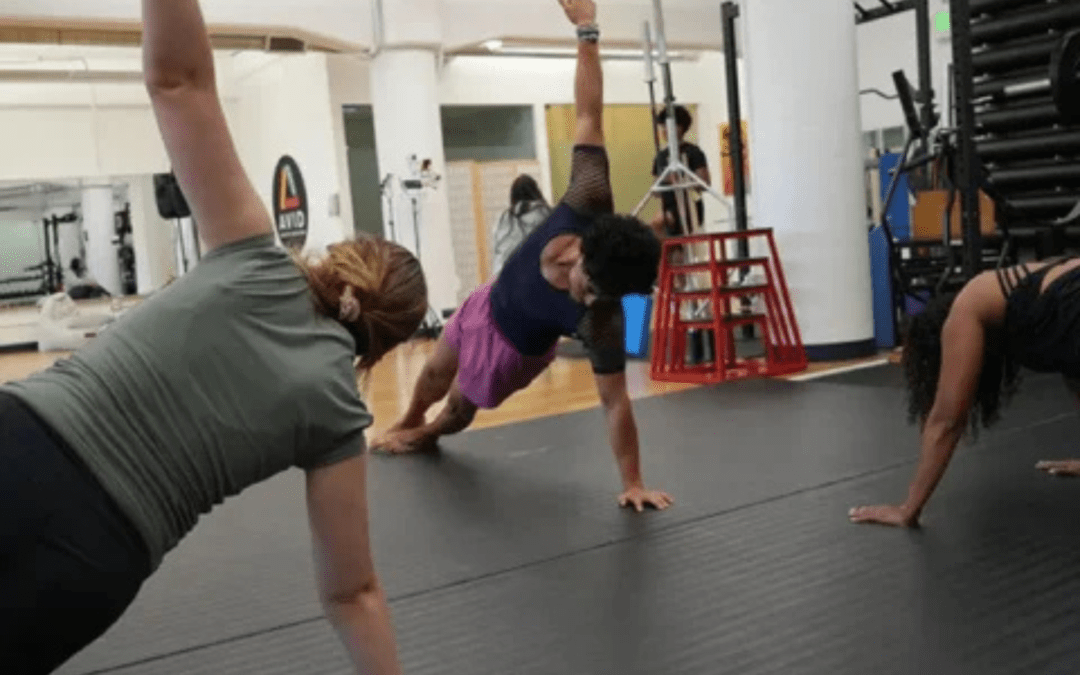
Located inside Avid Sports Medicine in San Francisco, Athlete Studio is a boutique training environment designed for people who want to build strength, improve performance, recover from injury, and protect their long-term movement health with sports medicine expertise close by. It is not simply another place to work out. It is a place to train with more information.
What Is Avid Athlete Studio?
Avid Athlete Studio is a limited-membership training space located within Avid Sports Medicine’s SOMA clinic. The concept is simple: create a high-quality gym environment where training and sports medicine do not exist in separate worlds.
Members have access to strength and conditioning equipment, cardiovascular training equipment, the AlterG Anti-Gravity Treadmill, gait analysis and movement screening opportunities, and an on-site sports medicine team. Membership is capped at 100 people to maintain a focused, less crowded environment.
For someone who wants a conventional large gym with hundreds of people and rows of machines, Athlete Studio may feel different. That is intentional. The studio is designed for people who want training to connect with recovery, movement quality, performance, and long-term health.
The Problem With The Rehab-To-Gym Gap
Imagine you injured your knee six months ago. You completed physical therapy. You can walk comfortably again. Stairs are improving. Your therapist has helped rebuild basic strength. Technically, rehabilitation is going well.
But your real goal was never simply walking without pain.
You want to hike.
Or run.
Or play tennis.
Or return to strength training.
Or simply feel confident carrying groceries, traveling, climbing stairs, and staying active for decades.
This is where many people get stuck. Clinical rehab eventually has to become real-world strength and conditioning. The exercises need to become harder. The environment needs to become less controlled. You need to tolerate more weight, more speed, more repetitions, and more complex movement. Yet moving directly from rehabilitation into an ordinary gym can feel like a huge jump. Athlete Studio is designed to help create a bridge between those stages.
Training After Physical Therapy Should Keep Progressing
One of the easiest mistakes after physical therapy is assuming that feeling better means the recovery process is finished. Pain reduction is important. But strength, endurance, balance, coordination, and tissue capacity may still need work. For example, someone recovering from knee pain may eventually need stronger quads, hips, hamstrings, and calves.
Someone recovering from Achilles pain may need to progress from basic calf raises to heavier strength work, running, and eventually higher-speed loading. A shoulder injury may require moving from light rehabilitation exercises toward more demanding pressing, pulling, carrying, or sport-specific movements.
The transition should be gradual, but it should keep moving forward.
Athlete Studio gives post-physical therapy members access to an environment where strength development can continue without completely disconnecting from the clinical team that helped them recover.
You Do Not Have To Be Injured To Train Smarter
The word “sports medicine” sometimes makes people assume a facility is only for injured athletes. Athlete Studio is broader than that. It is designed for runners, active adults, professionals, performance-focused athletes, people who have completed physical therapy, and anyone interested in staying active for the long term. Avid specifically positions the studio around performance, longevity, recovery, and more informed training.
That means you do not have to wait until something hurts before paying attention to how your body moves.
- You can assess running mechanics before preparing for a race.
- You can identify strength limitations before they interfere with training.
- You can work on mobility while you are still moving well.
- You can build capacity before increasing training volume.
Sports medicine becomes more useful when it is not only reacting to injury.
Why Runners May Find Athlete Studio Especially Useful
Running is simple in theory. In practice, building mileage safely can be complicated. A runner may be training for a first 5K, rebuilding after Achilles pain, preparing for a marathon, or simply trying to run consistently without recurring knee or foot pain. The body has to tolerate thousands of repeated steps.
Small differences in strength, mobility, training volume, and mechanics can become much more noticeable as mileage increases. Athlete Studio connects several tools that can be particularly useful for runners: strength training, gait analysis, movement screening, cardiovascular equipment, and access to the AlterG Anti-Gravity Treadmill.
Instead of separating running assessment, rehabilitation, and strength training into unrelated experiences, they can become part of the same performance strategy.
What Is The AlterG Anti-Gravity Treadmill?
One of the standout features of Athlete Studio is access to the AlterG Anti-Gravity Treadmill. The AlterG allows users to walk or run while reducing the amount of body weight being loaded through the lower body. That can create useful options for people who need to continue working on walking or running while controlling impact and load.
At Athlete Studio, Avid highlights AlterG use for return-to-running, post-surgical rehabilitation, load management, running form, mileage rebuilding, and lower-impact cardiovascular training. Consider a runner returning after injury. Going from no running straight to full-body-weight running may be too large a jump. The AlterG can provide another step in that progression.
The same idea may be useful after certain surgeries or during recovery from lower-body injuries when a clinician determines reduced-load training is appropriate. It is not simply an easier treadmill. It is a tool that allows training load to be adjusted more precisely.
Gait Analysis Turns Running Into Information
Many runners know what their pace is. They know their mileage. They know their heart rate. But they may know very little about how they actually move. Gait analysis can provide another layer of information. A movement professional can observe factors such as stride mechanics, cadence, foot contact, hip control, trunk position, and symmetry.
The goal is not to convince every runner that there is one perfect running form. There is not. The value comes from connecting movement patterns with the individual runner’s symptoms, strength, mobility, training history, and goals.
- If someone repeatedly develops knee pain during longer runs, gait information may help guide rehabilitation or strength programming.
- If someone is returning from injury, it can help identify whether movement has changed.
- If someone is preparing to increase mileage, it provides another perspective on what may need attention first.
Athlete Studio integrates gait analysis and movement screenings into its broader training environment.
Movement Screening Is Not About Finding Faults
People sometimes hear “movement screening” and assume someone is going to tell them everything they do is wrong.
That should not be the goal.
A useful movement screen is about understanding how your body currently performs different tasks.
- How does your ankle move?
- How well can you control one leg?
- How does your hip contribute during a squat or step?
- How does your shoulder move overhead?
- Where do you have plenty of mobility?
- Where might you need more strength?
Those observations can help make training more specific.
Instead of randomly adding mobility exercises because social media says everyone needs them, you can work on mobility if you actually need it. Instead of avoiding certain exercises forever, you can build the strength required to perform them better.
Training becomes more individual.
The Gym Floor Is Built For More Than Rehabilitation
A clinical environment does not mean the equipment is limited to light bands and rehab exercises. Athlete Studio includes strength and conditioning equipment for progressively challenging training.
The current facility includes Rogue power racks and cages, cable equipment, dumbbells up to 85 pounds, kettlebells, landmine setups, a sled, battle ropes, TRX suspension trainers, gymnastic rings, medicine balls, resistance bands, agility equipment, plyometric boxes, and cardiovascular machines.
That matters because rehabilitation eventually needs to become training.
If your goal is to return to sport, hiking, running, skiing, tennis, pickleball, dancing, or demanding recreational activity, basic strength is only the beginning.
The body needs progressive resistance.
It may need power.
It may need balance.
It may need speed.
It may need conditioning.
A strong recovery plan should eventually prepare you for the demands of the activity you actually want to do.
Active Adults Need Performance Training Too
Athlete Studio is not only for competitive athletes. “Performance” means different things at different stages of life. Performance might mean running a marathon. But it can also mean:
- Hiking comfortably on vacation.
- Keeping up with your children.
- Returning to the gym after knee surgery.
- Playing weekend tennis.
- Maintaining enough strength to stay independent.
- Continuing to ski in your 60s.
- Moving through a busy workday without recurring back pain.
The underlying goal is the same: maintaining enough capacity to do the things that matter to you. That is why longevity-focused strength training deserves more attention. You do not need to compete for movement quality, strength, balance, and cardiovascular fitness to matter.
Why The Sports Medicine Connection Changes The Experience
Perhaps the biggest difference between Athlete Studio and a traditional gym is what happens when something does not feel right.
At a conventional gym, pain often creates uncertainty.
- Do you stop training?
- Do you stretch?
- Do you search online?
- Do you book a physical therapist?
- Do you need a doctor?
At Athlete Studio, the training environment is physically connected to Avid’s broader sports medicine ecosystem. Avid’s services include sports medicine, physical therapy, chiropractic care, sports massage, Shockwave Therapy, PRP and regenerative medicine, gait analysis, movement screening, and AlterG training.
That does not mean every sore muscle needs medical treatment.
It means that when a real issue develops, there is a pathway for getting the right guidance. Training does not have to exist completely separately from healthcare.
What If You Are Returning After Surgery?
Returning to exercise after surgery can be intimidating. Physical therapy usually begins with restoring basic movement and function. But eventually, patients want more.
A knee surgery patient may want to return to hiking or running. A shoulder surgery patient may want to lift weights again. Someone recovering from hip surgery may want to return to cycling, golf, or travel.
The later stages of recovery often require a transition from rehabilitation exercises toward normal training. A facility that contains both clinical services and strength equipment can make that transition feel more connected.
The exact progression should still depend on the surgery, healing status, surgeon guidance, physical therapist recommendations, and individual goals.
Athlete Studio does not replace medical rehabilitation. It provides an environment where the next stage can continue.
A More Focused Alternative To The Crowded Gym
Some people love a huge gym. Others do not. Crowded training floors, waiting for equipment, loud spaces, and limited access to staff can make consistency harder for people who prefer a more focused environment.
Athlete Studio intentionally limits membership to 100 people. The studio also offers open-gym access, semi-private options, and more integrated performance memberships, depending on the level of support a member wants. That smaller format is part of the concept.
The goal is not to create the largest possible gym. It is to create a training environment where members have space, equipment, and access to support.
Different Memberships For Different Goals
Not everyone needs the same level of involvement. Some people already know how they want to train and primarily need access to equipment. Others want a quieter semi-private setting. Some want clinical check-ins and greater integration between training and recovery.
Athlete Studio currently outlines Open Gym, Semi-Private, and Performance membership options. Open Gym includes equipment access plus annual gait analysis and range-of-motion screening. Semi-Private adds priority booking and quieter sessions. Performance membership adds features such as clinical check-ins and priority AlterG access.
That flexibility makes sense because a healthy runner training independently may need something very different from someone transitioning out of rehabilitation.
What Training Smarter Actually Means
Training smarter is not about finding the perfect workout or avoiding every uncomfortable movement.
It means matching training to your current capacity and progressing from there.
It means increasing load gradually instead of making sudden jumps in volume. It means building strength rather than relying only on stretching when something feels tight. It means knowing the difference between normal training fatigue and pain that deserves attention. It means allowing recovery to be part of the program instead of something that happens only after an injury.
Smarter training also means using information when it is useful. Gait analysis, movement screening, strength testing, and sports medicine evaluation can help guide decisions, but they should serve the training process rather than complicate it.
The goal is not perfect movement.
The goal is movement that is strong, confident, and sustainable.
From Recovery To Performance Without Starting Over
One of the most frustrating parts of injury recovery is feeling like progress becomes disconnected every time you move from one stage to the next.
A physical therapist understands your injury history, then therapy ends. You join a gym where nobody knows what you have been working on. Training becomes less specific, symptoms return, and the whole process starts again.
A connected environment can make that transition smoother.
Athlete Studio allows recovery, strength, and performance to sit on the same continuum. Physical therapy can become progressive strength training. Strength can become higher-level performance. Performance training can then become a way of maintaining long-term movement health.
That continuity is one of the most valuable parts of the concept.
Who Should Consider Avid Athlete Studio?
Athlete Studio may be particularly useful for someone who wants more support than a conventional gym but does not necessarily need traditional rehabilitation every time they train.
That could include a runner rebuilding mileage after injury.
An active adult trying to stop recurring pain.
Someone finishing physical therapy who wants to keep building strength.
An athlete looking for a more clinically informed performance environment.
A professional in SOMA looking for a focused training space.
Someone preparing for a race.
Someone returning after surgery.
Or someone whose main goal is simply staying strong, capable, and active over the long term.
You do not need to be injured. And you do not need to be an elite athlete. You need a reason to keep moving.
Avid Athlete Studio In San Francisco
Avid Athlete Studio brings together something that is often separated: training, recovery, sports medicine, and performance.
Members can strength train in a focused environment, access the AlterG Anti-Gravity Treadmill, use gait and movement analysis to better understand their mechanics, and connect with Avid’s sports medicine and rehabilitation team when needed.
The studio is located within Avid Sports Medicine at 425 2nd Street in San Francisco’s SOMA neighborhood, with convenient access for people in SOMA, South Beach, Mission Bay, Rincon Hill, the Financial District, and downtown San Francisco.
For people who are tired of treating the gym and recovery as completely separate parts of life, Athlete Studio offers a different approach.
- You can train when you are healthy.
- You can rebuild when you are recovering.
- You can assess movement when something feels off.
- And you can keep progressing instead of waiting for the next injury to force you to pay attention.
Ready for a more intentional way to train? Explore Avid Athlete Studio and request membership details from Avid Sports Medicine to start building strength, improving movement, and staying active for the long term.
FAQ: Avid Athlete Studio
What Is Avid Athlete Studio?
Avid Athlete Studio is a limited-membership boutique gym located inside Avid Sports Medicine in San Francisco. It combines strength and conditioning equipment with access to sports medicine, movement analysis, gait assessment, AlterG training, and recovery services.
Is Athlete Studio Only For Injured People?
No. It is designed for runners, active adults, athletes, post-physical therapy members, professionals, and people interested in long-term movement and performance.
Can I Use Athlete Studio After Physical Therapy?
Yes. The studio is specifically designed to help support people rebuilding strength after physical therapy and transitioning from rehabilitation toward independent training.
Does Athlete Studio Have An AlterG Treadmill?
Yes. Athlete Studio offers access to an AlterG Anti-Gravity Treadmill for uses such as reduced-load walking and running, return-to-run progression, post-surgical rehabilitation, and mileage rebuilding.
Does Athlete Studio Offer Gait Analysis?
Yes. Gait analysis and movement screening are part of the Athlete Studio environment and are incorporated into certain membership benefits.
Is Athlete Studio A Regular Gym?
It includes strength, cardio, agility, mobility, and conditioning equipment, but it differs from a conventional gym because it operates inside a sports medicine clinic with access to Avid’s healthcare and performance team.
Where Is Avid Athlete Studio Located?
Avid Athlete Studio is located at Avid Sports Medicine, 425 2nd Street, Suite 307, in the SOMA neighborhood of San Francisco.
Is Membership Limited?
Yes. Avid currently plans to cap Athlete Studio membership at 100 members to maintain a focused and uncrowded training environment.