
Key Takeaways
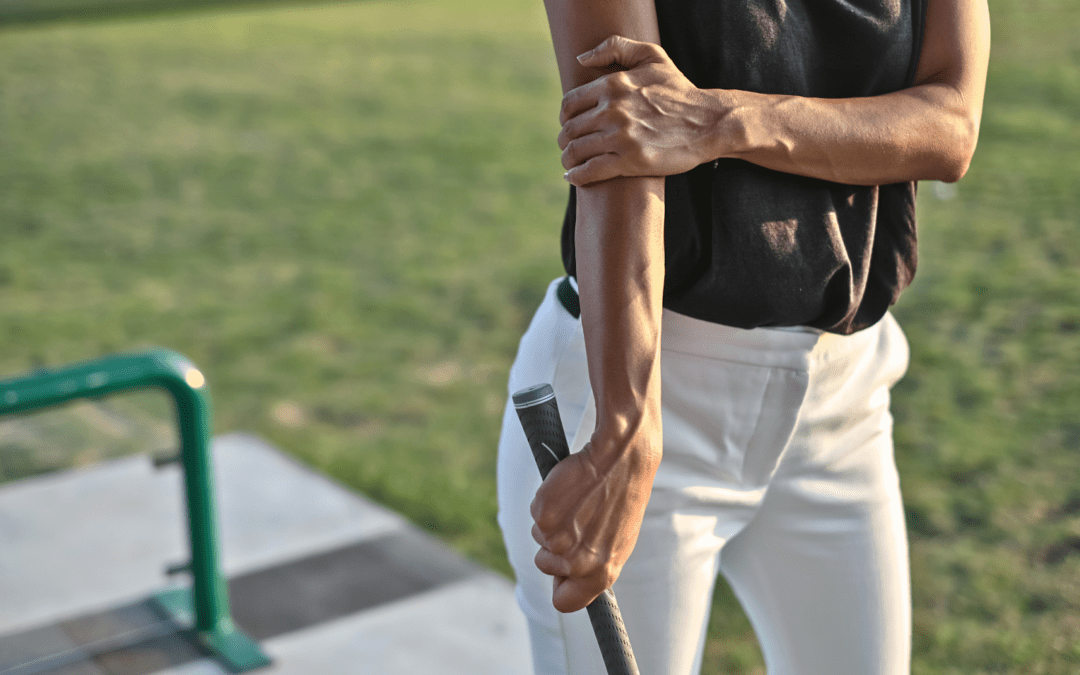
- Elbow and wrist pain in golfers often comes from repeated stress, poor tissue tolerance, and subtle movement imbalances that build over time.
- Conditions like golfer’s elbow and tendonitis respond best to a combination of strengthening, mobility training, swing adjustments, and proper recovery.
- Early recognition of symptoms helps prevent pain from becoming chronic and allows golfers to return to the course sooner and with less limitation.
At Avid Sports Medicine we work with golfers of all levels to improve movement quality, address chronic aches, and recover from overuse injuries. Our services include injury assessment, movement and swing analysis, personalized strength and mobility programs, hands-on therapy, and regenerative treatments designed to help you move with confidence.
Many golfers push through discomfort, hoping it will go away on its own. Too often it does not, and what starts as mild irritation turns into chronic pain that affects your practice, your game, and your everyday life. Elbow and wrist problems are among the most common complaints golfers face.
These issues are not simply the result of overuse or poor technique. They can come from subtle imbalances in strength, mobility restrictions, and repetitive loads that your tissues are not prepared to handle. Understanding what causes these problems and how to address them can be the difference between a sidelined summer and a successful season of golf.
Understanding Golf Related Elbow and Wrist Pain
The act of swinging a golf club might look graceful, but it places significant forces and torque through your arms, elbows, and wrists. Every swing involves acceleration, deceleration, and impact forces loaded through muscles, tendons, and joints. If any part of the system is weak, stiff, or fatigued, those forces can exceed what the tissues are designed to handle.
Elbow and wrist pain in golf often comes from repeated microtrauma. That means tiny amounts of stress over many swings accumulate faster than the body can recover. Over time this can lead to tendon irritation, inflammation, and pain.
Common sites of discomfort include:
- Inner elbow (tendons that flex the wrist and fingers)
- Outer elbow (tendons that extend the wrist and fingers)
- The wrist itself, especially on the thumb side
- Tendons that control bending and twisting of the wrist
Understanding the structures involved and the way stress travels through the arm helps golfers take control of the problem rather than simply masking symptoms.
What is Golfer’s Elbow?
Golfer’s elbow is the common name for medial epicondylitis, a condition that causes pain on the inside of the elbow. It occurs when the flexor tendons that attach to the inside of the elbow become irritated or inflamed.
These flexor muscles play a key role in gripping the club and stabilizing the wrist through the swing. When those muscles and tendons are overworked or not strong enough to handle the load, small tears and irritation develop at the tendon attachment site.
Golfer’s elbow often begins as a dull ache that shows up after a round or practice session. If ignored it can progress to sharp pain with gripping, swinging, or even everyday activities like opening a jar or carrying groceries.
Signs of golfer’s elbow include:
- Pain on the inner side of the elbow
- Tenderness to touch along the inner elbow
- Pain with gripping or bending the wrist toward the palm
- Weakness when twisting or lifting objects
If these symptoms are present with your golf game it is a sign that your tissues are struggling to adapt to the loads you are placing on them.
What is Tendonitis?
Tendonitis refers to irritation or inflammation of a tendon. In golfers this most often affects tendons around the wrist or elbow. While golfer’s elbow is a specific type of tendon irritation on the inside of the elbow, tendonitis can occur in other areas as well.
Wrist tendonitis may produce pain on the front or back of the wrist or along the thumb side. It may show up during a swing, after impact with the ball, or even after gripping the club for extended periods.
Symptoms of tendonitis include:
- Dull or sharp pain with movement
- Swelling over the tendon
- Pain with gripping or wrist bending
- Tenderness to touch along the tendon path
Tendonitis often begins gradually. At first pain may only occur after a long round or after many balls on the range. Over time the pain can become more persistent and interfere with performance.
Common Causes of Elbow and Wrist Problems in Golf
While poor swing mechanics can contribute to arm injuries, many golfers experience pain despite technically consistent swings. A variety of factors influence whether your tissues adapt well or begin to hurt.
Common contributing factors include:
Overuse and volume
Repetitive swings without adequate rest increase cumulative stress on the tendons and muscles.
Improper grip or hand position
If your grip is too tight, too weak, or misaligned, forces distribute unevenly through your wrist and elbow.
Weak or imbalanced muscles
If certain muscles are underdeveloped, other structures take on more load than they were designed for.
Poor flexibility or mobility
Limited wrist extension, tight forearms, or stiff shoulder joints can force compensations that overload the elbow.
Lack of recovery
Training too frequently without rest, sleep, or proper nutrition slows healing and increases injury risk.
Equipment factors
Using clubs that are too stiff, too long, or have inappropriate grip size can change the way force travels through your arms.
Each of these factors alone may not cause significant pain. But when several occur together they can create a perfect storm for tendon irritation.
Why These Conditions Hurt and Persist
To understand why golfer’s elbow and tendonitis hurt, it helps to look at how tendons heal. Tendons connect muscle to bone and are designed to transmit force. Compared to muscle, tendons have limited blood supply. While that is fine for daily movement, it slows down how quickly damage repairs.
When a tendon experiences repeated loading without adequate recovery it becomes irritated. That irritation can trigger inflammation, pain, and a feeling of tightness. If the cycle continues the tendon begins to weaken and small microtears develop. Without rest and appropriate stimulus for repair, those microtears accumulate and the pain becomes more chronic.
Bone, muscle, tendon, and nerve irritation often coexist. That means an issue that starts in a tendon can alter your movement pattern slightly. That slight change can then create stress elsewhere, such as the wrist or shoulder, amplifying the problem.
Understanding this process helps golfers see pain not just as something to tolerate but as a message. Your body is asking for better mechanics, stronger muscles, and smarter recovery.
How to Recognize Early Warning Signs
Catching elbow and wrist irritation early gives you the best chance of avoiding a full blown injury. Early warning signs include:
- Mild discomfort after a round that does not disappear by the next day
- Slight stiffness in the wrist or forearm that lasts longer than usual
- Pain when gripping the club, but not yet sharp pain
- Tenderness to touch over the inside or outside of the elbow or along the wrist
If you notice these signs it does not mean you need to stop playing golf forever. It does mean you should pay attention, modify your activity, and work on strength and mobility to support healing.
Strategies to Prevent Elbow and Wrist Problems
Many golfers can prevent or reduce elbow and wrist pain by addressing the underlying contributors. The goal is to build strength, mobility, and resiliency so repetitive forces can be absorbed without irritation.
Strength Training
Stronger muscles around the forearm, shoulder, and trunk help take stress off the smaller tendons around the wrist and elbow. A focused strengthening program might include:
- Forearm strengthening using a light resistance band
- Wrist curls and extensions with low to moderate weight
- Grip strength work using therapeutic putty or light hand grippers
- Shoulder and scapular stability exercises such as rows and external rotations
- Core work that supports trunk stability and efficient force transfer
These exercises increase tissue tolerance and improve movement patterns.
Flexibility and Mobility Support
Proper mobility in the shoulder, elbow, wrist, and hand helps your body absorb forces through a full range of motion. Mobility work can include:
- Gentle wrist flexion and extension stretches
- Forearm muscle stretching
- Shoulder mobility drills
- Gentle joint circles for elbow and wrist
Mobility drills not only help prevent injury but also enhance overall swing mechanics.
Golf Specific Drills to Reduce Stress
Golfers can benefit from drills designed to improve mechanics and reduce stress on the arm:
- Slow motion swings focusing on the lead arm path
- Grip pressure drills where you hold the club with light tension and swing
- Impact practice with short chips to build smooth contact without excess force
- Alignment and tempo drills to create rhythm rather than power
These drills help reinforce efficient movement while reducing unnecessary tension in the arms.
When Rest Is the Best First Step
If pain spikes or sharp pain develops during practice or play it may be a sign that your tissues need rest. Rest means modifying your activity. It does not always mean stopping golf completely but it does mean reducing volume and intensity while the body heals.
For example:
- Swap full swings for short game only for several days
- Replace golf with cycling or swimming temporarily
- Avoid repetitive gripping drills until pain lessens
Rest gives your tissues space to repair microdamage and reduces ongoing irritation.
How Manual Therapy Can Help
Hands-on care can be valuable in supporting recovery. Manual therapy techniques used by physical therapists and clinicians may include:
- Soft tissue massage to forearm muscles
- Joint mobilizations to increase wrist or elbow range of motion
- Nerve glides if symptoms involve nerve irritation
- Trigger point work to release localized tight points
Manual therapy targets restrictions in the muscle and fascia that may contribute to altered movement patterns.
When to Consider Advanced Care
Most golfers with elbow or wrist irritation will improve with the strategies listed above. However, persistent or worsening pain may require advanced care. Seek professional assessment if:
- Pain persists beyond two to three weeks
- Pain interferes with daily activities such as opening jars or carrying bags
- Pain becomes sharp rather than dull or achy
- There is numbness, tingling, or weakness in the arm or hand
A qualified clinician or sports medicine specialist can evaluate your condition, assess swing mechanics, and recommend treatments such as physical therapy, injections, or advanced regenerative options when appropriate.
Evidence Behind Treatment Strategies
Scientific research supports the value of strength training, mobility work, and load management in reducing overuse injuries. Research shows that tendinopathy responds well to controlled loading programs that include eccentric and concentric muscle training. Improving shoulder and trunk stability also correlates with reduced stress downstream at the elbow and wrist.
Combining movement retraining with tissue loading and recovery strategies gives golfers the best chance of staying strong and avoiding chronic problems.
Integrating Prevention Into Your Golf Routine
Prevention is not just about treating pain after it occurs. It is about building habits that create resilience. A simple warm up before you hit the range or course can make a big difference. Consider:
- Five to ten minutes of dynamic mobility drills
- Light resistance band work for the arms and shoulders
- Easy gripping and wrist bias drills
- Mental preparation focusing on rhythm and balance
These habits prime your tissues and mind so you start your round ready to move well and avoid unnecessary stress.
Setting Realistic Expectations
Recovery takes time. Tendons and joints need stimulus and rest in a balanced cycle to adapt and strengthen. You may feel improvement quickly, but the full benefits of strength, mobility, and movement training often build over weeks and months rather than days.
Approach your recovery with patience and consistency. Track your symptoms, celebrate small milestones, and modify your routine based on how your body responds.
Take Your Game Further With Avid Sports Medicine
If elbow or wrist pain has been holding you back from playing the rounds you want or improving your performance, know that you do not have to settle for discomfort. At Avid Sports Medicine we specialize in helping golfers of all levels move better and stay healthy.
Our team offers comprehensive injury assessment, golf specific movement analysis, individualized strength and mobility programs, hands-on therapy when needed, and regenerative treatment options designed to support your body’s healing process.
Schedule a consultation with Avid Sports Medicine to explore your elbow and wrist symptoms, assess your swing mechanics, and begin a plan that helps you play more golf with less pain.
Your body has healing talent of its own. With the right guidance and strategy you can unlock it and get back to the game you love.