
Key takeaways
- Golfers elbow is common in tennis players and usually comes from tendon overload, not one single bad swing.
- The inside elbow gets stressed by gripping, spin, serving force, and equipment factors like string tension and racquet setup.
- The best fix is progressive strengthening plus smart load management, not total rest and random stretching.
Avid Sports Medicine combines sports medicine expertise with personalized physical therapy, performance focused strength programming, and advanced regenerative treatment options when appropriate to help tennis players recover from golfer’s elbow and prevent repeat flare ups. Our goal is to reduce pain, rebuild tendon capacity, and guide a smart return to serving, topspin, and match play with confidence.
Golfer’s elbow hurts in the most inconvenient way. Turning a doorknob, opening a jar, carrying groceries, even holding your phone can light it up. You do not need to touch a golf club to get golfer’s elbow. Tennis players get it all the time, especially if you love a heavy topspin forehand, a big kick serve, or you have been grinding through matches and training blocks without enough recovery.
If you play tennis, your forearm is doing constant behind the scenes work. It stabilizes your wrist on contact, controls racquet angle, absorbs vibration, and helps you create spin. When that workload increases faster than your tendon can handle, your inner elbow becomes the weak link and starts sending messages. At first it might feel like a tight forearm after hitting. Then it becomes a nagging pain you cannot ignore.
The encouraging part is that golfer’s elbow is very treatable. Most tennis players improve with a smart plan that calms symptoms, rebuilds tendon capacity, and gradually returns you to full hitting without fear.
What Is Golfer’s Elbow In Tennis Players
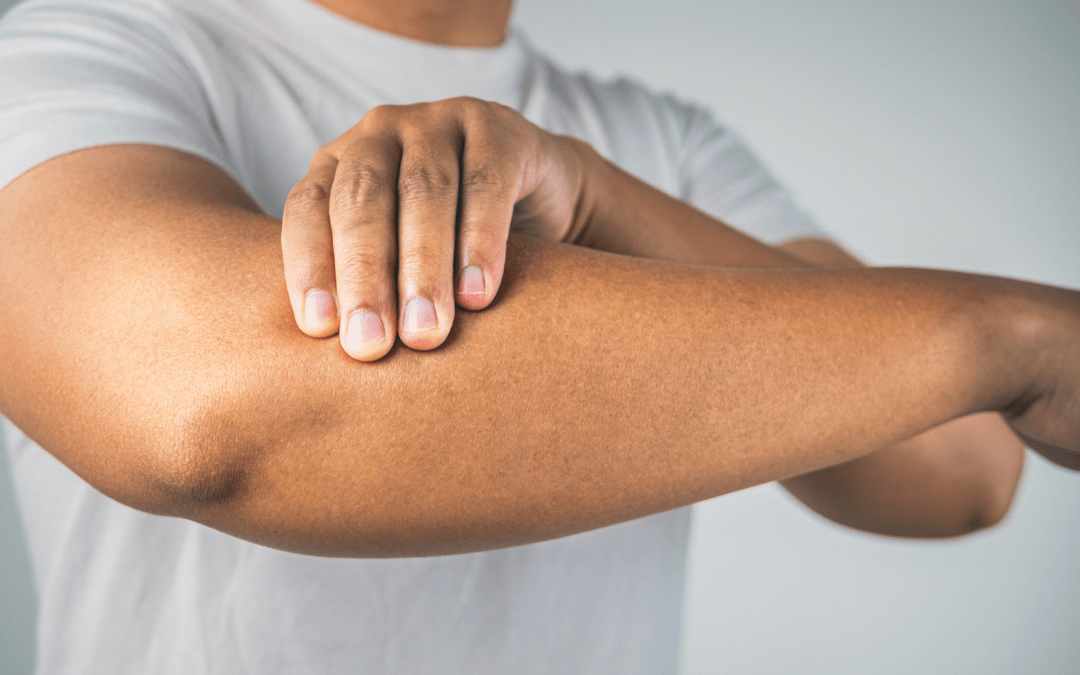
Golfer’s elbow is the common name for medial epicondylitis, which involves pain where the forearm flexor tendons attach to the bony bump on the inside of your elbow.
These tendons help flex the wrist and fingers and support your grip. In tennis, they are heavily involved in controlling the racquet through contact, especially when you generate spin or hit with a lot of pace. Over time, repetitive stress can irritate the tendon attachment and create pain and weakness.
Why Tennis Players Get Golfer’s Elbow
Many people think golfer’s elbow is only about wrist flexion. In tennis, it is often about the combination of gripping, racquet control, and repeated high force contact.
Tennis players are commonly at risk when:
- Their forearm is doing too much work because shoulder and upper back support is lagging
- They grip the racquet like it owes them money, especially under pressure
- They generate heavy topspin with a lot of wrist and forearm involvement
- They return to hitting after time off and ramp volume too quickly
- Their equipment setup increases stress, like a too heavy racquet, too tight strings, or a grip size that does not match their hand
There is also a sneaky factor that shows up in real life. Tennis practice is rarely just tennis. It is tennis plus gym workouts, plus work and laptop time, plus carrying kids, plus house life. The tendon does not care where the load comes from. It cares about total load.
Symptoms Tennis Players Should Watch For
Most tennis players notice pain on the inside of the elbow and into the forearm. You may feel it during or after hitting, but it can also show up during daily tasks like lifting a pan, picking up a bag, or squeezing a bottle. Grip strength often feels reduced, even if your arm looks strong.
A common pattern is that it starts as soreness after play, then becomes pain earlier in the session, then starts affecting your confidence on serves and forehands.
If you also notice tingling, numbness, or symptoms into the ring and little finger, that can involve nearby nerve irritation and is worth assessing sooner.
Is Golfer’s Elbow The Same As Tennis Elbow
No, but they are close cousins.
Tennis elbow is pain on the outside of the elbow and involves different tendon attachments. Golfer’s elbow is pain on the inside of the elbow and involves the forearm flexor tendons.
Tennis players can get either one depending on stroke mechanics, training load, and how their body handles repetitive gripping and impact. Some players even have both at different times, which is why diagnosis matters before you commit to a plan.
What Causes Golfer’s Elbow In Tennis
Most cases come down to tendon overload. Tendons like consistent training that builds gradually. They get irritated by sudden spikes, high force repetition, or repetitive strain without enough recovery.
In tennis, common causes include:
Technique and contact patterns
Late contact on the forehand, excessive wrist action on topspin shots, or relying on the forearm to generate power rather than the hips and trunk can overload the medial elbow.
Serve and spin demands
Serving with high force, especially with a spin serve, is a known contributor.
Equipment setup
Grip size, racquet weight, string tension, and vibration can all influence how hard your forearm has to work. A setup that is too demanding can push a reactive tendon into a flare.
Gym training that doubles the load
Pull ups, heavy rows, deadlifts with a death grip, long farmer carries, and high volume curls can keep the tendon irritated even if you “rest from tennis.”
Work and lifestyle load
Long hours of typing or repetitive tool work can add to the stress. The tendon adds everything up.
What Not To Do With Golfer’s Elbow
This is where tennis players accidentally keep it going.
Do not keep playing through sharp pain that changes your swing. If you start altering contact or grip to avoid pain, you are building compensation.
Do not aggressively stretch into pain on the first few days. Gentle mobility can be fine, but yanking on a sore tendon attachment usually backfires.
Do not rely only on a strap, massage gun, or random forearm rolling. Those can help symptoms short term, but they do not rebuild capacity.
And do not shut everything down for weeks and then return to full hitting. Tendons hate the cycle of deconditioning and re overload. They do better with smart load management and progressive strengthening.
Should You Rest Golfer’s Elbow Or Keep Playing
Most tennis players do best with relative rest, not total rest.
Relative rest means you reduce the things that spike symptoms while you keep the arm moving and start rebuilding strength. If your elbow hurts during serves and heavy forehands, you might temporarily reduce serving volume, avoid heavy topspin drilling, shorten sessions, or switch to controlled rallying and footwork work while you rehab.
A simple check is the 24 hour rule. If your elbow pain is clearly worse the next morning after a session, the load was too high. If discomfort is mild and settles within 24 hours, you are likely in a workable range.
How To Fix Golfer’s Elbow For Tennis Players
The best fix is a plan that does two jobs at the same time:
- Calm the tendon down
- Build the tendon back up
Here’s what that looks like in a tennis friendly way.
Step one: calm symptoms and reduce irritants
Start by removing the highest stress inputs for a short period. For many players that means:
- Reduce serving volume and kick serve repetitions
- Avoid heavy topspin drilling for now
- Limit gym gripping work that triggers pain
- Use a slightly looser grip and focus on relaxed hand during rallying
If you want to keep conditioning, that is great. Just choose options that do not keep poking the tendon.
Step two: rebuild forearm capacity with progressive loading
This is the part that actually changes the problem.
A common starting point is isometrics, which are holds. They can reduce pain sensitivity and start rebuilding strength without a lot of joint motion. From there, you progress into slow controlled strengthening, then into more sport specific work.
The target muscles are the wrist flexors and pronators, because those are heavily involved in medial elbow load.
The key is consistency. Tendons respond to repeated, progressive loading over time, not random exercise bursts.
Step three: integrate the shoulder, trunk, and scapula
Here is the secret sauce for tennis players. Your elbow often hurts because your forearm is working too hard to stabilize the racquet and create power. If your shoulder, upper back, and trunk are not contributing well, your forearm becomes the backup engine.
A tennis specific rehab plan often includes:
- Rotator cuff and scapular strength
- Thoracic mobility for better swing mechanics
- Core and hip power transfer so your forearm is not generating everything
This is also where good coaching makes a difference, because small technique tweaks can reduce load quickly.
Step four: return to hitting with a smart progression
Even if pain improves, your tendon may not be ready for match intensity. A gradual return helps prevent the classic relapse.
A common progression is:
- Controlled mini tennis and light rallying
- Groundstrokes at moderate pace
- Serve practice at reduced volume and intensity
- Full practice sets
- Competitive matches last
This is not about being cautious forever. It is about building capacity in the right order.
What Are The Best Exercises For Golfer’s Elbow
The best exercises are the ones that match your pain level and stage of rehab, then progress logically.
Early on, isometrics can help calm pain. Later, slow strengthening builds tendon capacity. And eventually, grip endurance and tennis specific drills prepare you for matches.
You do not need 15 exercises. You need the right few, done consistently and progressed over time.
If you are not sure whether to emphasize wrist flexion, forearm pronation, or grip work first, that’s where an assessment helps. The plan should match your symptoms, your sport demands, and your current strength.
Do Elbow Straps Help Golfer’s Elbow
Many players get short term relief from a counterforce strap. It can reduce strain at the tendon attachment during activity by changing how force is distributed. Think of it as a tool for training days, not a cure.
If you use one, pair it with strengthening. The strap can help you play with less irritation while you build long term capacity.
How Long Does Golfer’s Elbow Take To Heal
Recovery varies. Some mild cases improve in weeks with smart changes. More persistent cases can take months, and tendon problems can be slow if they have been brewing for a long time.
The better question is: how quickly can you start making forward progress? Often, you can. Many players feel improvement once they stop feeding the irritant and start progressive loading that matches their tendon tolerance.
If symptoms are not changing after a few weeks of a consistent plan, it is worth getting evaluated to confirm diagnosis and adjust strategy.
When Should You See A Doctor For Golfer’s Elbow
Consider an evaluation if:
- Pain is not improving after 2 to 4 weeks of smart changes
- You are losing grip strength or dropping items
- Symptoms include tingling or numbness
- Pain is affecting daily life or preventing you from playing at all
- You have recurring flare ups that keep coming back
A proper assessment can also rule out look alike issues like nerve irritation or other tendon involvement.
How To Prevent Golfer’s Elbow From Returning
Once you feel better, prevention is about keeping your tendon capacity ahead of your tennis demands.
A few habits make a big difference:
- Build forearm strength year round, not only when it hurts
- Keep shoulder and scapular strength strong so your forearm does not over stabilize
- Warm up the wrist and forearm before hitting
- Progress volume gradually after breaks or travel
- Check equipment setup if you flare repeatedly, especially grip size and string tension
You can love tennis and still respect your recovery. You do not earn points for playing through tendon pain. You earn points for staying in the sport long enough to keep improving.
Golfers Elbow Support At Avid Sports Medicine
If you are a tennis player dealing with inner elbow pain, you do not have to guess your way through it or take months off hoping it magically disappears. At Avid Sports Medicine in San Francisco, we assess your elbow, forearm strength, shoulder support, and movement mechanics, then build a tennis specific plan to calm symptoms and rebuild tendon capacity for the long run. That can include sports medicine evaluation, individualized physical therapy, and performance based strength programming designed to get you back to hitting with confidence.
For stubborn tendon cases that are not improving with standard rehab alone, we can also discuss advanced regenerative options when appropriate as part of a comprehensive plan, always paired with structured loading and return to play guidance. Ready to get back on court without that inner elbow pinch? Schedule an appointment with Avid Sports Medicine and let’s build your plan.