
Key Takeaways
- Shockwave therapy stimulates healing in stubborn tendon and fascia conditions, but results are usually gradual, not instant.
- Many patients notice trend improvement over several weeks, especially when shockwave is paired with strengthening and smart load management.
- Progress is best measured by function and reactivity, not just pain score. Look for better mornings and better tolerance to activity.
- If you are not improving, reassessment matters. Diagnosis, load, and rehab progression often determine the outcome.
If you are considering shockwave therapy, you are probably not asking whether it works in theory. You are asking a more human question.
When will I actually feel a difference?
That question matters because most people who look into shockwave are not doing it for fun. They are doing it because something has been dragging on. A tendon that will not settle. A heel that hurts every morning. A shoulder that flares every time you train. A nagging pain that has turned into a pattern. And after weeks or months of trying the usual fixes, it is normal to want a timeline.
The honest answer is that shockwave results are not instant for most people. But they are often predictable when you understand what shockwave is doing, what your tissue needs, and how your plan is structured. Some patients notice changes early, like reduced pain or improved mobility. Others notice a gradual shift over a few weeks as the tissue begins to tolerate load again. The point is not just feeling better for a day. The point is building a more durable recovery.
What Shockwave Therapy Is
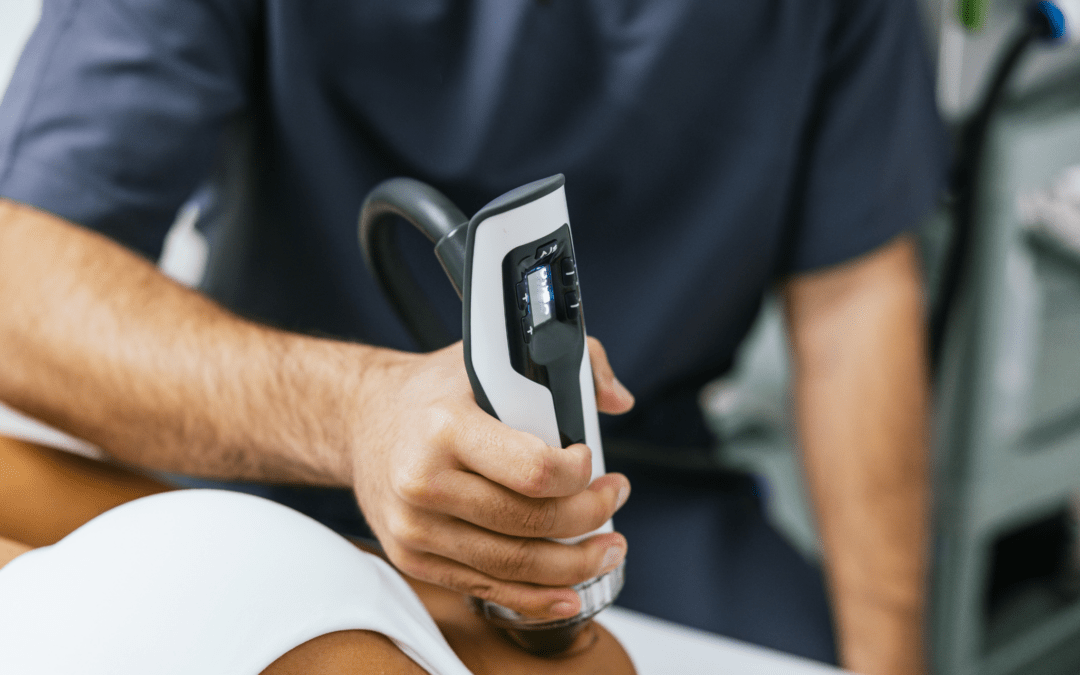
Shockwave therapy, often called ESWT, uses acoustic energy to stimulate healing in injured tissue. That energy is delivered through the skin, typically to tendons, fascia, or other soft tissue areas that are not responding well to rest, stretching, or traditional rehab.
Think of it as a way to wake up a stubborn area. Chronic tendon and fascia pain often involves tissue that has become irritated, less organized, and less capable of tolerating load. Shockwave is used to stimulate a healing response, increase blood flow and cellular activity, and help the tissue remodel over time.
That last part is important. Remodel over time.
Shockwave is not a numbing treatment. It is not designed to cover up pain so you can ignore the problem. It is designed to create the conditions for real change, especially when combined with the right strengthening and movement plan.
Why People Choose Shockwave Therapy
Most people do not start with shockwave. They get there after trying other steps.
They rest, then return and flare again. They stretch, then feel temporary relief, then the pain returns. They ice, foam roll, swap shoes, change workouts, and still feel stuck.
Shockwave is often used when an injury becomes persistent, especially in tendon and fascia conditions like:
- Plantar fasciitis and heel pain
- Achilles tendinopathy
- Patellar tendon pain
- Hamstring tendon pain
- Glute tendon pain
- Tennis elbow and golfer’s elbow
- Shoulder tendon issues in some cases
The common thread is chronic overuse type pain where the tissue needs a stronger signal to adapt and remodel.
Why Shockwave Results Take Time
This is the part that helps most people set their expectations.
Shockwave is not like taking a pain reliever. It does not simply reduce inflammation and make pain disappear overnight. Its goal is to stimulate the body’s healing response in tissue that has been slow to heal.
Healing involves biology. Biology takes time.
Tendons and fascia are not highly vascular like muscle. They get blood flow, but not in the same way. They often heal more slowly, especially when the issue has been present for months. Shockwave can help stimulate a stronger response, but the remodeling still happens on a timeline.
That timeline depends on:
- How long the issue has been present
- How irritated the tissue is
- What type of tissue is involved
- Your activity level and load management
- Your rehab plan and strength progression
- Your overall recovery factors like sleep and stress
So the better question becomes: what does the typical arc look like, and what should I expect along the way?
How Many Shockwave Sessions Do People Usually Need
Protocols vary depending on the condition, the device used, and how your body responds. Many treatment plans involve a series of sessions spread out over several weeks.
Some patients notice changes after the first session or two. Others do not notice meaningful improvement until later in the series. That does not automatically mean it is not working. It often means your tissue is still in the early phase of adaptation.
What matters most is that the plan is individualized and tracked. If you are improving, you keep building. If you are not improving, you adjust.
What You Might Feel After The First Shockwave Session
This is one of the most common questions, and the answer is surprisingly nuanced.
After the first session, many people feel one of three things.
Some feel mild soreness, similar to a deep workout soreness in the treated area. This can last a day or two.
Some feel immediate relief, usually because the nervous system response changes and the area feels less sensitive temporarily.
Some feel no change at all after the first session. That is also normal.
The first session is often about introducing the stimulus and seeing how the tissue reacts. It is like the first week of a new training plan. You do not get stronger from one workout. You start the process.
When Do Most People Start To Notice Results
Most patients who improve will notice one or more of these changes during the weeks following their early sessions.
- Pain starts to feel less intense.
- Morning stiffness decreases.
- The area feels less reactive after activity.
- You can tolerate more load without flaring.
- Recovery after workouts improves.
- You stop thinking about the injury all day.
The timing varies, but many people describe a gradual shift rather than a single moment where everything changes.
A helpful mindset is this: shockwave often changes the trend line. The pain curve starts pointing down, not up. The flare ups become smaller. The good days become more frequent.
That is what progress often looks like in tendon and fascia recovery.
Why Some People Feel Worse Before They Feel Better
This scares people, so it is worth addressing directly.
In some cases, the treated area can feel temporarily more sensitive after a session, especially in the first week or two. That does not mean you are injured again. It often means the tissue is responding to the stimulus and you need to manage load appropriately.
This is why follow through matters. If you get shockwave and then immediately do your hardest workout of the month, you may flare. Not because shockwave “failed,” but because the tissue is still adapting and the load was too high too soon.
The goal is to pair shockwave with smart activity progression.
What Makes Shockwave Results Faster Or Slower
Shockwave results are not random. There are clear factors that tend to influence how quickly someone improves.
How Long You Have Had The Problem
In general, newer issues tend to improve faster than long standing ones. Chronic tendon pain often involves tissue changes that take longer to remodel.
That does not mean chronic cases cannot improve. Many do. It means the plan may require more patience and consistency.
How Well You Manage Load During Treatment
If you keep aggravating the tissue every week, you make it harder for healing to win. This is especially true for runners with plantar fasciitis or Achilles pain, and for lifters with elbow tendinopathy.
The goal is not to stop everything. The goal is to reduce the specific overload pattern while you rebuild capacity.
Whether Strengthening Is Part Of The Plan
This is a big one.
Shockwave is often most effective when paired with progressive strengthening. Tendons and fascia need load to remodel well. The right load is like a training stimulus that teaches the tissue to become stronger.
If you only do shockwave but keep the same mechanics and load that caused the issue, the tissue often returns to the same pattern.
Your Overall Recovery
Sleep, stress, nutrition, and other health factors influence healing. If you are under recovered, your body adapts more slowly. This does not mean you cannot improve. It just means recovery habits matter more than you think.
What You Should Do Between Shockwave Sessions
This is where patients can either accelerate progress or accidentally stall it.
- The main goals between sessions are:
- Keep the tissue moving without repeatedly flaring it
- Follow the strengthening plan prescribed
- Avoid major spikes in the activity that triggers pain
- Be consistent with mobility and strength work
Most people do best when they keep activity steady and controlled. Erratic spikes tend to create flare ups that make the timeline feel longer.
If your plan includes strength work, do it. If you skip it, you are leaving results on the table.
Can You Work Out While Doing Shockwave Therapy
Often yes, but with smart modifications.
This is not a treatment where you typically need to stop all activity for weeks. But you do need to respect the tissue’s capacity during the rebuild.
If you are a runner with Achilles pain, you may need to reduce hills, speed work, and long runs temporarily.
If you are a lifter with tennis elbow, you may need to reduce heavy gripping and pulling volume for a period.
If you have plantar fasciitis, you may need to manage barefoot time and reduce impact spikes.
The goal is to stay active while the tissue adapts, not to keep testing it at full intensity.
How Do You Know If Shockwave Is Working
This is one of the most important questions, because some people look only at pain intensity and miss other signs of progress.
- Here are better progress markers:
- Morning pain decreases
- You can do more activity with the same or less pain
- You recover faster after activity
- Tenderness in the tissue decreases
- You stop needing to constantly modify your movement
- Your pain becomes less reactive and more predictable
When Should You Reassess Or Change The Plan
If you are not noticing any improvement after several sessions, it is worth reassessing. That does not mean shockwave will never work for you. It means one of these may be true.
The diagnosis needs refinement. Not all heel pain is plantar fasciitis. Not all elbow pain is tendon related. Sometimes the driver is elsewhere.
The tissue is still being overloaded between sessions.
Strength progression is not matched to your irritability.
The treatment parameters may need adjustment.
There may be another contributing factor, such as nerve involvement, joint mechanics, or an underlying biomechanical issue.
This is why individualized care matters. A plan should evolve based on response, not stay static.
What Conditions Tend To Respond Well
While no treatment has a guarantee, shockwave is commonly used for chronic tendon and fascia issues, especially when conservative care has not been enough.
It is often considered for plantar fasciitis and Achilles tendinopathy, among others, because these issues can become stubborn and load sensitive.
The key is matching the right treatment to the right diagnosis and pairing it with a rehab plan that builds tissue capacity.
What To Avoid During Shockwave Therapy
You usually do not want to do the thing that triggers your pain at maximum volume during treatment. That tends to keep the tissue reactive.
Avoid sudden spikes in running mileage, jumping volume, or gripping volume depending on your injury.
Avoid judging the treatment after one session.
Avoid expecting every week to feel linear. Tendon recovery often looks like two steps forward, one step back, then forward again.
Avoid doing nothing between sessions. Shockwave is a tool. The rehab is the strategy.
What A Realistic Results Timeline Can Look Like
Every case is different, but here is a practical way to think about the timeline.
Week 1 to 2 is often about introduction and early response. Some people feel less pain. Others feel mild soreness. Others feel no change yet.
Week 3 to 6 is when many people start noticing meaningful trend improvement. Morning pain decreases. Activity feels less reactive. You can tolerate more.
Weeks 6 to 12 is where longer term remodeling continues for many conditions. This is often when people notice the biggest difference in what they can do without flaring.
This is not a promise. It is a way to set expectations so you do not abandon the plan too early.
Shockwave Therapy At Avid Sports Medicine
At Avid Sports Medicine in San Francisco, shockwave therapy is not treated like a standalone magic button. We use it as part of a comprehensive plan built around your diagnosis, your sport, and your goals. That includes sports medicine evaluation, individualized physical therapy, and performance based strength programming designed to rebuild tissue capacity and prevent repeat flare ups.
For some patients, we may also discuss regenerative medicine options, including stem cell based therapies when appropriate, depending on the condition and your recovery needs. The goal is always the same: not just symptom relief, but a durable return to the activities you love.
Ready to get clear on your timeline and your best next step? Schedule an appointment with Avid Sports Medicine today and let’s build your plan.
FAQ
How many shockwave sessions do I need to see results?
Many people begin noticing improvement after a few sessions, but the best number depends on the condition, how long it has been present, and how your tissue responds. Most plans use a short series of sessions spaced over several weeks.
Can shockwave work after one session?
Some people feel a change after the first session, often as reduced sensitivity or improved mobility. For most, results build gradually as the tissue remodels over time.
What should I avoid after shockwave therapy?
Avoid big spikes in the activity that irritates the area, like long runs, intense jumping, or heavy gripping volume, especially right after a session. Keep movement steady and follow your rehab plan.
Is it normal to be sore after shockwave therapy?
Yes. Mild soreness in the treated area for a day or two is common. It can feel like deep workout soreness. If pain significantly escalates or feels unusual, check in with your provider.
Can I keep training while doing shockwave therapy?
Often yes, with smart modifications. Most people do best when they reduce the specific movements or volumes that flare symptoms while staying active with pain controlled alternatives.
How do I know if shockwave therapy is working?
Look for trend changes: less morning pain, less reactivity after activity, improved tolerance to load, and fewer flare ups. Progress is often measured by function, not just a pain score.
When should I stop shockwave and try something else?
If there is no meaningful improvement after several sessions, it is worth reassessing. Sometimes the diagnosis needs refining, load management needs adjusting, or rehab progression needs to be changed.
Does shockwave therapy permanently fix the problem?
It can help resolve stubborn tendon or fascia pain, but long term results are best when you also address the underlying drivers like strength deficits, mechanics, and training load patterns.
Is shockwave therapy safe?
Shockwave is commonly used for chronic tendon and fascia conditions and is generally considered safe when performed by trained clinicians. Your provider should screen for situations where it is not appropriate.
How long do results last?
Many people maintain results when they continue a strength and load management plan that supports the tissue. If you return to the same overload pattern without building capacity, symptoms can return.