
Key takeaways
- Plantar fasciitis in runners is usually a load and capacity issue. It often flares when mileage, hills, or intensity increase faster than your foot can adapt.
- The best long term fix is strength. Calf endurance and foot muscle strength reduce strain on the plantar fascia more than stretching alone.
- Manage symptoms while staying active. Adjust training, reduce high impact variables, and use low impact cardio when needed to maintain fitness.
Avid Sports Medicine supports runners with expert sports medicine evaluation, personalized physical therapy, gait and movement analysis, and performance based strength programming designed to reduce pain and prevent recurrence. When appropriate, our team also offers advanced regenerative treatment options to support healing in certain fascia, tendon, and joint conditions, always paired with a structured plan that helps you return to running with confidence.
Plantar fasciitis has a way of taking something you love and making it feel unpredictable. You wake up, step out of bed, and the first few steps feel sharp and tender in the heel. Then it eases up, so you convince yourself it is fine. You run anyway. Maybe it even feels okay once you are warmed up. But later that day, or the next morning, it is back. Sometimes worse.
If you are a runner, this can be especially frustrating because it does not always behave like a typical injury. It can feel better during movement and worse after rest. It can flare for no obvious reason. And it can stick around longer than you expect if you keep repeating the same pattern.
The good news is that plantar fasciitis is very treatable. Most runners improve with a smart plan that reduces irritation, rebuilds foot and calf strength, and gradually restores running tolerance. The key is understanding what is driving your symptoms and fixing the load problem, not just stretching your foot and hoping for the best.
What The Plantar Fascia Does
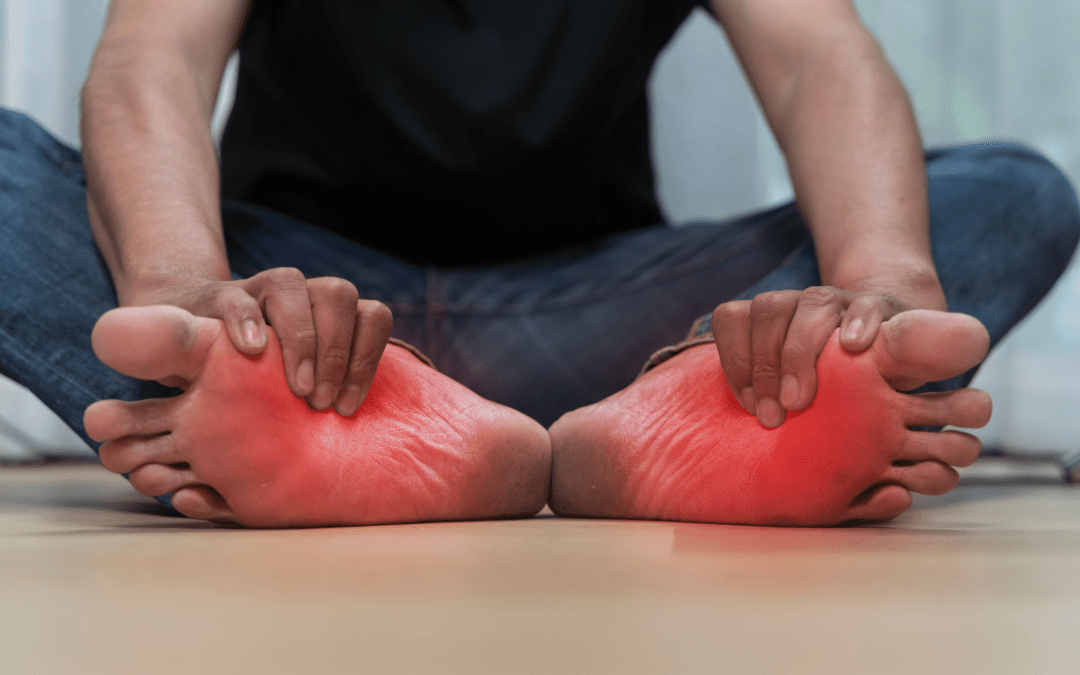
The plantar fascia is a thick band of tissue that runs along the bottom of your foot from your heel to your toes. It supports your arch, helps transfer force when you push off, and acts like a spring when you run.
Running increases demand on the plantar fascia because every step loads the foot, stores energy, and then releases it. That is normal. The problem begins when the load you are asking from the plantar fascia becomes more than what it can comfortably tolerate, especially if other tissues that share the job, like your calves and foot muscles, are not doing enough.
In most runners, plantar fasciitis is less about one “bad step” and more about repeated overload over time. That overload can come from training changes, foot mechanics, calf tightness and weakness, recovery gaps, or even footwear.
Why Plantar Fasciitis Shows Up So Often In Runners
Plantar fasciitis is common because it sits at the intersection of three big runner realities.
First, runners tend to increase training in waves. A new plan, a race build, a return after time off, or even a busy week of stress can change how your body tolerates load.
Second, the foot is often undertrained. Many runners do not strengthen their feet and calves directly. The foot is expected to handle thousands of steps without dedicated strength work.
Third, plantar fasciitis can become reactive quickly. A little irritation can turn into a cycle when you keep running at the same volume while hoping it disappears.
Common Signs Of Plantar Fasciitis In Runners
Plantar fasciitis symptoms can vary, but there are patterns that come up again and again.
Many runners feel heel pain with the first steps in the morning or after sitting for a while. The tissue stiffens during rest, then gets tugged when you stand up. You may feel it at the start of a run, then notice it fades as you warm up. Later, it can return after the run or the next day.
Pain is often felt near the inside part of the heel, but it can also spread along the arch. Some runners notice tenderness when pressing into the heel, especially after long runs or speed sessions.
If your pain is severe, comes with numbness or tingling, or feels very different from the pattern above, it is worth getting assessed. Several conditions can mimic plantar fasciitis, and the right plan depends on the right diagnosis.
Why Plantar Fasciitis Happens
Most plantar fasciitis is a capacity problem. Your plantar fascia and supporting foot structures are reacting because the demand is higher than what they can handle right now. The next step is figuring out why demand spiked, or why capacity is low.
Training load increased too quickly
This is the most common trigger. A jump in mileage, more speed sessions, more hills, or even more walking on top of your running can overload the tissue. Travel and long standing days can add stress without you realizing it.
Calf weakness or calf tightness
Your calves and Achilles help control how your foot loads and how your heel lifts off the ground. When calves are weak or fatigue easily, the plantar fascia tends to take more strain. Tight calves can also increase stress by limiting ankle motion and changing how you push off.
Foot strength is not keeping up
Your foot has small muscles that support the arch and control motion. If those muscles are not strong, the plantar fascia often takes on more work. This is especially common in runners who have never done foot strength work and suddenly increase training.
Shoe and surface changes
Switching shoes can change stress quickly. A lower heel drop shoe can increase demand on the plantar fascia and Achilles. Shoes that are too worn out can reduce support and change your mechanics. Surface changes can matter too. More time on concrete, more treadmill running, or a sudden switch to trails can all be triggers.
Limited big toe mobility
The big toe needs to extend well when you push off. If it does not, the foot often compensates and the plantar fascia can get irritated. This is a hidden driver that many runners never consider.
Recovery is not matching the load
Sleep, stress, nutrition, and rest days matter. Plantar fasciitis often sticks around when recovery is poor because tissues stay sensitive and do not adapt well.
Step one: calm it down without losing fitness
If you are trying to fix plantar fasciitis as a runner, the first goal is to reduce irritation while keeping you active. Complete rest is not always required, but continuing with the exact same training that caused the flare usually prolongs symptoms.
Adjust your running intelligently
Most runners do best by temporarily reducing the variables that spike symptoms. That often means less mileage, fewer consecutive run days, and avoiding speed work and hills for a short period. Easy running may be okay if your pain stays mild and does not flare the next day.
A helpful approach is the 24 hour check. If your symptoms are noticeably worse the next morning after a run, your current load is too high. If they settle within 24 hours and morning pain is not escalating, you are likely in a manageable range.
If running is too painful, switch to low impact cardio for a short time. Cycling, swimming, and elliptical can maintain fitness while the foot calms down.
Reduce extra standing and walking when possible
Many runners forget that the plantar fascia does not only get loaded during runs. Long standing days, long walks, and being barefoot on hard floors can keep it irritated. If you are in an active job, you may need to manage this variable as part of your recovery.
Manage morning pain
Morning pain is a common frustration. A gentle warm up before you take your first steps can help. Ankle pumps, light calf stretches, and gentle foot rolling can reduce that sharp “first step” discomfort.
Step two: rebuild the foundation with the right exercises
Stretching alone rarely fixes plantar fasciitis long term. The most successful runner recoveries include strengthening, especially for the calves and intrinsic foot muscles.
Calf strengthening is a priority
The calf and Achilles complex helps control heel lift and reduces stress on the plantar fascia. When calf capacity improves, many runners notice symptoms improve faster.
Start with slow, controlled calf raises. If pain is too reactive, begin with isometric holds, then progress.
Over time, progress to single leg calf raises and endurance work, because running requires repeated calf loading for thousands of steps.
Strengthen the foot, not just the ankle
Foot strengthening helps your arch support itself instead of relying on the plantar fascia to do everything.
A simple and effective drill is the short foot exercise, where you gently lift the arch without curling the toes. Toe yoga, towel pickups, and resisted toe flexion can also help, but the key is consistency, not complexity.
Restore big toe mobility
If the big toe is stiff, it can change your push off mechanics. Gentle mobility work and targeted strengthening can restore extension and reduce strain through the arch.
Address hip and core strength
It may sound unrelated, but hip stability affects foot loading. When the hip is weak or unstable, the knee and foot often collapse inward more, increasing foot stress. Strengthening glutes and improving single leg control can reduce strain down the chain.
Step three: return to running with a plan that builds tolerance
One of the most common reasons plantar fasciitis becomes chronic is returning to the same training pattern too soon. Pain may improve, but capacity is not fully rebuilt yet.
A better approach is a gradual return.
Start with shorter, flatter runs at an easy conversational pace. Add walk breaks if needed. Increase weekly load slowly and prioritize consistency over big jumps.
Keep strength work going even when symptoms improve. That is how you prevent relapse.
Avoid reintroducing hills and speed work until morning pain is consistently mild and you can run easy without a next day flare.
Footwear Tips That Can Help Plantar Fasciitis
Shoes can be supportive, but they are not the whole solution. Still, they can make the recovery process easier.
Choose shoes that feel comfortable and supportive for your foot. Avoid worn out shoes. If you are switching to a lower heel drop shoe or minimalist style, transition gradually, especially if you are already dealing with plantar fasciitis.
Some runners feel better with a temporary increase in support while symptoms are reactive. Others do well with a slight change in cushioning. The best choice is often the shoe that reduces symptoms while you build strength.
If you are unsure, a gait and movement assessment can help match footwear to your needs and reduce unnecessary overload.
Common Mistakes That Keep Plantar Fasciitis Going
Plantar fasciitis is very fixable, but these mistakes can slow progress.
One is pushing through morning pain while increasing mileage. Another is doing aggressive stretching on a step without strengthening, which can irritate tissue. Another is treating it like a foot only problem and ignoring calf strength, hip stability, and training errors.
Another common mistake is being inconsistent with rehab. Tendons and fascia respond best to frequent, progressive loading. A few exercises once a week rarely moves the needle.
Recovery Timeline For Runners
Plantar fasciitis recovery depends on how long symptoms have been present and how consistently you adjust training and build strength.
A newer flare addressed early often improves within a few weeks. Longer standing symptoms can take a few months to fully settle and rebuild capacity. This does not mean months without running. It means months of smart training, consistent strength work, and gradual progression.
The goal is not just to feel better today. The goal is to create a foot and calf system that can handle your training next month and next season.
When It Is Time To Get Help
If your pain is not improving after a couple of weeks of smart changes, if it keeps flaring every time you run, or if you are unsure what is driving it, getting assessed can save time and frustration.
A proper evaluation can confirm whether the plantar fascia is the true source or whether another issue is mimicking it. It can also identify the specific mechanics and strength gaps that are keeping the tissue overloaded.
Fixing Plantar Fasciitis With Avid Sports Medicine
If your Achilles keeps tightening up every time you add hills, speed, or longer miles, you do not have to guess your way through it. At Avid Sports Medicine in San Francisco, we assess your tendon, calf strength, ankle mobility, and running mechanics, then build a runner specific plan that restores tendon capacity and confidence. When appropriate, we also offer advanced regenerative options to support certain stubborn tendon cases as part of a complete program. Book an evaluation with Avid Sports Medicine and let’s get you back to running without that Achilles countdown.