
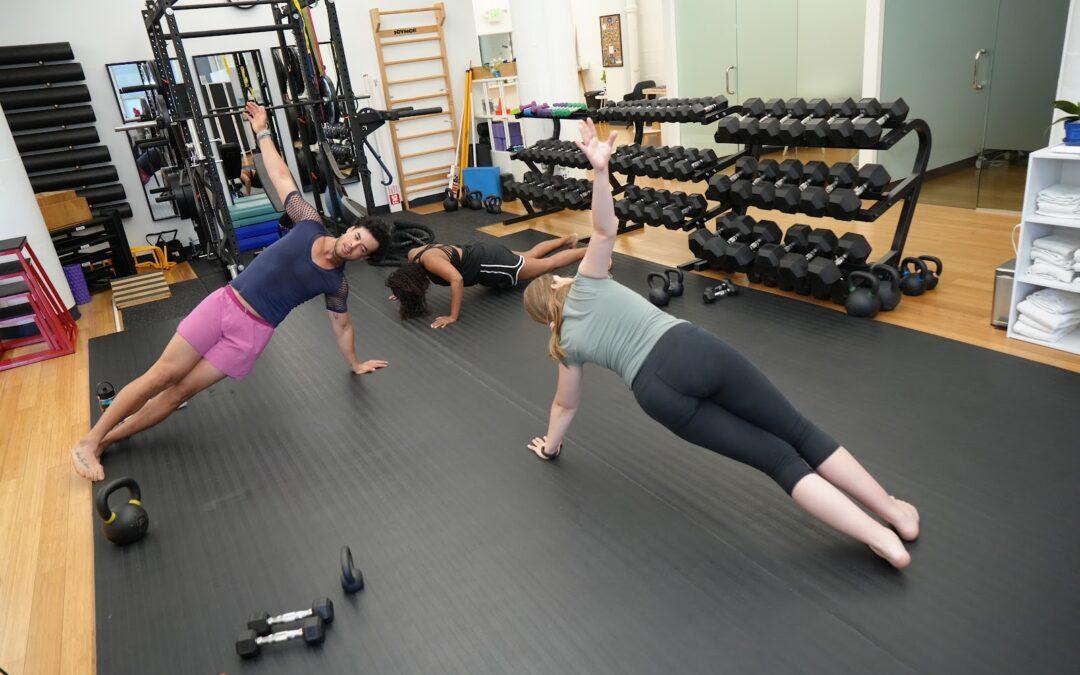
Key Takeaways
- A boutique gym is a smaller, more specialized fitness space built around a focused and often more personalized training experience.
- Boutique gyms differ from traditional gyms by emphasizing quality of experience, specialized equipment, smaller membership numbers, and clearer training goals.
- Avid Athlete Studio adds sports medicine, gait analysis, movement screening, AlterG access, and recovery services to the boutique gym model.
- A boutique gym can be especially useful for people who want to connect strength, performance, recovery, and long-term movement health.
Walk into a large commercial gym and you usually know what to expect. There may be rows of cardio machines, long lines of strength equipment, a busy locker room, and hundreds of members using the same space at different times of day.
A boutique gym takes a different approach.
Instead of trying to be everything to everyone, a boutique gym is usually smaller, more focused, and designed around a particular type of training experience. Some specialize in Pilates, cycling, boxing, strength training, or small-group fitness. Others build their identity around performance, recovery, mobility, or personalized coaching.
What makes a boutique gym appealing is the experience around the training. Members may have more access to guidance, a less crowded environment, specialized equipment, smaller membership numbers, and a clearer sense of what the gym is designed to help them achieve.
For people who feel lost in a large gym or who want their training to connect more closely with their health, recovery, or performance goals, the boutique model can offer a more intentional way to exercise.
What Is A Boutique Gym?
A boutique gym is typically a smaller fitness facility with a more specialized approach than a traditional large gym.
Rather than offering the widest possible range of equipment and services, boutique gyms tend to focus on a particular experience. That might be functional strength training, yoga, Pilates, indoor cycling, athletic performance, personal training, or another fitness specialty.
The environment is often more curated as well. Instead of walking into a large facility and deciding what to do on your own, members may have more interaction with coaches, more structured programming, and a stronger relationship with the staff and community around them.
A boutique gym may also limit membership or class size to maintain that experience.
This is one of the biggest differences between boutique gyms and traditional gyms. A large commercial gym is often built around access. A boutique gym is usually built around focus.
Boutique Gym Vs Traditional Gym
Traditional gyms work well for many people, especially those who are confident planning their own workouts and who mainly want access to equipment. A boutique gym tends to offer something different.
The space is usually smaller, which can make it feel less anonymous. Equipment is often selected around the gym’s specific training philosophy rather than simply filling the floor with as many machines as possible. Staff may know members more personally, and training can feel more connected to individual goals.
In a large gym, a member may know what exercise they are doing but not necessarily why it belongs in their program. In a more specialized environment, training is often tied to a clearer purpose, whether that is becoming stronger, improving athletic performance, returning from injury, or maintaining mobility over time.
Neither model is automatically better.
The right fit depends on what someone wants from their gym experience.
Why Boutique Gyms Have Become So Popular
Many people do not struggle with knowing that exercise is good for them. They struggle with consistency.
A large gym can provide plenty of equipment, but that amount of choice can also be overwhelming. Someone may walk in without a plan, repeat the same few exercises, or stop attending because the environment never feels personal.
Boutique gyms often reduce that uncertainty. The member may know what the space is for, what type of training it supports, and who to ask when they need guidance. That can make it easier to build a routine.
The smaller environment can also create a stronger sense of accountability. When staff recognize members and people see familiar faces, training may feel less transactional and more connected.
For some people, that sense of familiarity is just as valuable as the equipment.
A Smaller Gym Does Not Mean Less Serious Training
The word “boutique” can sometimes make people imagine a stylish studio with light workouts and very little serious training. That is not necessarily true.
Many boutique gyms are built around high-level strength, conditioning, performance, or technical training. Their smaller size allows them to focus their equipment and services rather than trying to serve every possible type of member.
A strength-focused boutique gym may have power racks, free weights, cables, sleds, kettlebells, resistance equipment, and conditioning tools. A running-focused studio may include treadmills, gait analysis technology, and running-specific strength equipment.
The question is not how large the space is. The more useful question is whether the space is designed around what you want to achieve.
Personalization Is A Major Part Of The Experience
One reason people choose boutique gyms is that the environment often feels more personal. This does not always mean every member receives one-on-one personal training. It may simply mean the staff has a clearer understanding of why people are there and what kind of training they are trying to do.
That can be particularly useful for someone who is returning from injury, managing recurring pain, preparing for a race, or trying to train more consistently after years away from exercise.
Instead of adapting yourself to whatever the gym offers, the training environment can be better matched to your goals.
That is one of the reasons boutique fitness appeals to people who want more than basic equipment access.
What Should You Look For In A Boutique Gym?
Not every boutique gym offers the same experience, so it helps to look beyond the branding. A useful boutique gym should have a clear purpose. You should be able to understand what the facility specializes in and whether that matches what you want from training.
The quality of guidance also matters. A smaller gym is only more valuable if the coaching, programming, or support is thoughtful.
It is also worth looking at:
- Whether the equipment supports your goals
- How crowded the space becomes during normal training hours
- What type of coaching or professional support is available
- Whether the gym can accommodate changes in your health, fitness, or recovery needs
- How easily you can progress from beginner-level work to more demanding training
A good boutique gym should give you room to grow rather than locking you into one narrow routine.
Boutique Gyms And The Return From Injury
Boutique gyms can be especially useful for people moving from physical therapy back into normal exercise. This transition is often harder than expected.
During physical therapy, exercises are usually selected carefully and adjusted based on symptoms, strength, and progress. Once therapy ends, a person may suddenly find themselves in a large gym without that same context.
They know they are supposed to keep strengthening, but they may not know how heavy to go, which exercises are appropriate, or when it is safe to progress.
A smaller training environment with access to knowledgeable staff can make that transition feel much more manageable.
This is also where a gym connected directly to sports medicine can offer an additional advantage.
When The Gym And Sports Medicine Are Connected
Training and healthcare are often treated as completely separate experiences.
A person gets injured, goes to physical therapy, finishes treatment, and then returns to a gym where nobody knows the history of the injury. If pain returns, the person leaves the gym and goes back into healthcare.
That cycle can become frustrating.
A training space located inside a sports medicine environment creates more continuity.
If a knee starts hurting again, a shoulder begins to feel unstable, or a runner notices the return of Achilles pain, the member does not have to start from scratch in a completely different system.
This is one of the ideas behind Avid Athlete Studio.
How Avid Athlete Studio Fits The Boutique Gym Model
Avid Athlete Studio is a boutique gym located inside Avid Sports Medicine in San Francisco.
The studio uses a limited-membership model with a 100-member cap, which helps create a more focused and less crowded training experience. Members have access to strength and conditioning equipment, cardiovascular equipment, gait and movement assessment, the AlterG Anti-Gravity Treadmill, and an on-site sports medicine team.
That combination makes the studio different from a conventional boutique fitness concept.
The experience is not built around one exercise class or one type of workout. Instead, it is built around training, recovery, movement, and performance.
For some members, that may mean rebuilding strength after physical therapy. For others, it may mean preparing for a race, improving running mechanics, staying active without recurring pain, or maintaining strength and mobility over the long term.
A Boutique Gym For Runners
Runners often benefit from a more specialized training environment because running performance involves much more than running alone.
Calf strength, hip control, foot and ankle capacity, trunk stability, training load, and recovery can all influence how a runner feels.
At Avid Athlete Studio, runners can combine strength training with gait analysis and access to the AlterG Anti-Gravity Treadmill.
That can be useful for runners returning from injury, rebuilding mileage, or preparing for an event.
The benefit is not that every runner needs advanced technology.
The benefit is having those tools available when they actually add value.
Why Gait Analysis Can Matter
Gait analysis looks at how someone walks or runs.
For runners, this may include stride characteristics, cadence, foot contact, hip control, trunk position, and symmetry. The goal is not to force everyone into one “perfect” running style.
Instead, gait analysis can help identify patterns that may be relevant to pain, performance, or return from injury.
When gait information is combined with strength testing, mobility assessment, and clinical history, the result is a more complete picture.
That is one reason gait analysis fits well inside a boutique performance environment. It adds context to the training rather than replacing it.
The Role Of The AlterG Anti-Gravity Treadmill
The AlterG Anti-Gravity Treadmill allows users to walk or run while reducing the amount of body weight placed through the lower body.
This can be useful during certain stages of post-surgical rehabilitation, injury recovery, return-to-running programs, and load management.
For example, someone recovering from a lower-body injury may not be ready for normal running volume. The AlterG can provide an intermediate step where the person works on running mechanics and cardiovascular fitness while reducing impact.
As strength and tolerance improve, the amount of body weight can gradually increase.
In a boutique gym environment, this type of equipment can make progression more precise.
Strength Training For More Than Athletes
One of the advantages of the boutique model is that training can be more goal-specific. That matters for people who do not necessarily think of themselves as athletes.
A 40-year-old professional who wants to stay strong, a runner preparing for a 10K, someone recovering from knee surgery, and an older adult focused on long-term mobility may all need strength training, but they may need very different programs.
Strength can support bone health, joint stability, balance, independence, athletic performance, and confidence in daily movement.
A boutique gym can make that training feel more purposeful because the environment is designed around progression rather than simply access.
What Does “Smarter Training” Really Mean?
Smarter training does not mean making exercise more complicated.
It usually means making better decisions about what your body needs.
That may involve increasing resistance gradually rather than jumping straight into heavy training. It may mean addressing weakness instead of endlessly stretching something that feels tight. It may involve changing running volume when a tendon becomes irritated rather than stopping all exercise.
Smarter training also means knowing when pain is normal training fatigue and when it deserves more attention.
In a traditional gym, that decision often falls entirely on the member.
In a sports medicine-connected boutique gym, there is more opportunity to get informed guidance before a small issue becomes a larger one.
Boutique Gyms And Longevity
Fitness goals change with age.
In your 20s, the priority may be speed, performance, or appearance. Later, the goal may become staying strong enough to keep hiking, traveling, playing tennis, running, skiing, or simply moving comfortably.
That shift does not make training less important. It makes training more important.
Strength, balance, mobility, and cardiovascular fitness all contribute to long-term independence and quality of life.
A boutique gym that understands both performance and longevity can provide a useful middle ground between a commercial gym and a medical clinic.
You can train before anything hurts, but you also have support available when your body needs more attention.
Is A Boutique Gym Worth It?
The answer depends on what you value.
If you only want basic equipment access and enjoy training independently, a traditional gym may be all you need.
If you prefer a smaller environment, more specialized equipment, closer access to guidance, and a stronger connection between training and your long-term goals, a boutique gym may be a better fit.
For people returning from injury or trying to avoid recurring setbacks, the ability to connect training with sports medicine may make the experience even more valuable.
The important thing is choosing a gym that matches how you actually want to train.
Who Might Prefer A Boutique Gym?
Boutique gyms can work well for people who want more direction and a more focused training environment.
They may be particularly appealing to:
- People who dislike crowded commercial gyms
- Runners and athletes who want performance-focused support
- Active adults who want to maintain strength and mobility
- People returning from physical therapy or surgery
- Anyone who values a smaller, more connected fitness community
The right boutique gym should feel like a place where your training can evolve with you.
What Makes Avid Athlete Studio Different
Avid Athlete Studio takes the boutique gym idea and connects it directly with healthcare.
Members train inside a sports medicine environment with access to physical therapy, sports medicine, chiropractic care, sports massage, regenerative medicine, shockwave therapy, gait analysis, movement screening, and other performance and recovery services.
That does not mean members need to be injured.
It means they have support when they need it.
Someone may train independently for months without requiring clinical care. If a movement limitation or injury concern appears, however, the connection is already there.
The goal is continuity.
Training, recovery, and performance do not have to be separate chapters.
What Is A Boutique Gym? The Short Answer
A boutique gym is a smaller, more specialized training space that prioritizes experience, focus, and individual goals over large membership volume.
Some boutique gyms specialize in one workout style. Others, like Avid Athlete Studio, build the experience around strength, performance, recovery, and long-term movement health.
What makes the model appealing is not simply a smaller room or fewer people.
It is the opportunity to train in an environment where the equipment, services, and support are all built around a clearer purpose.
Avid Athlete Studio In San Francisco
Avid Athlete Studio offers a boutique gym experience for people who want their training to feel more intentional.
Located inside Avid Sports Medicine in San Francisco, the studio combines strength and conditioning equipment with gait analysis, movement screening, AlterG treadmill access, and on-site sports medicine support. Membership is capped at 100 people to maintain a focused, uncrowded environment.
Whether you are training for a race, rebuilding after physical therapy, returning from surgery, or simply trying to stay strong and active for the long term, the studio offers a way to connect exercise with a better understanding of your body.
If you are looking for more than basic gym access, explore Avid Athlete Studio and request membership details from Avid Sports Medicine. It may be the right place to build strength, improve movement, and train with a clearer plan for long-term health and performance.
FAQ: What Is A Boutique Gym?
What Is A Boutique Gym?
A boutique gym is a smaller, more specialized fitness facility that usually focuses on a more personalized training experience than a traditional large gym.
How Is A Boutique Gym Different From A Regular Gym?
Traditional gyms generally focus on equipment access and large memberships. Boutique gyms tend to emphasize specialization, smaller membership numbers, more guidance, and a more curated training environment.
Are Boutique Gyms Only For Serious Athletes?
No. Boutique gyms may serve beginners, active adults, people returning from injury, recreational athletes, and anyone who prefers a more focused fitness environment.
Are Boutique Gyms More Personal?
Often, yes. Smaller membership numbers can allow staff to know members better and provide more context around training, although the level of support varies by facility.
Can A Boutique Gym Help After Physical Therapy?
A boutique gym can be useful after physical therapy if it offers appropriate strength equipment and knowledgeable support for the transition back to normal training.
What Makes Avid Athlete Studio A Boutique Gym?
Avid Athlete Studio has a limited-membership model, specialized strength and conditioning equipment, gait analysis, AlterG access, movement screening, and on-site sports medicine support.
Is Avid Athlete Studio Only For Injured People?
No. It is designed for runners, active adults, professionals, performance athletes, post-physical therapy members, and people focused on long-term movement health.
Where Is Avid Athlete Studio Located?
Avid Athlete Studio is located inside Avid Sports Medicine in the SOMA neighborhood of San Francisco.