
Key Takeaways
- Connective tissue in the knee includes ligaments, tendons, cartilage, meniscus, and fascia, all of which help support stability and movement.
- Knee pain often happens when tissue load exceeds tissue capacity, either from sudden injury or gradual overuse.
- The best treatment plan depends on the tissue involved and usually includes load management, strength training, mobility, and movement assessment.
- Regenerative medicine may help certain stubborn connective tissue and joint conditions when paired with the right diagnosis and rehab plan.
Knee pain can be confusing because it does not always feel like one clear injury. Sometimes it is a sharp pain when you twist. Sometimes it is a dull ache after activity. Sometimes the knee feels unstable, swollen, stiff, or just not trustworthy. You may not know whether the issue is the joint, the muscles, the cartilage, the tendon, or something deeper.
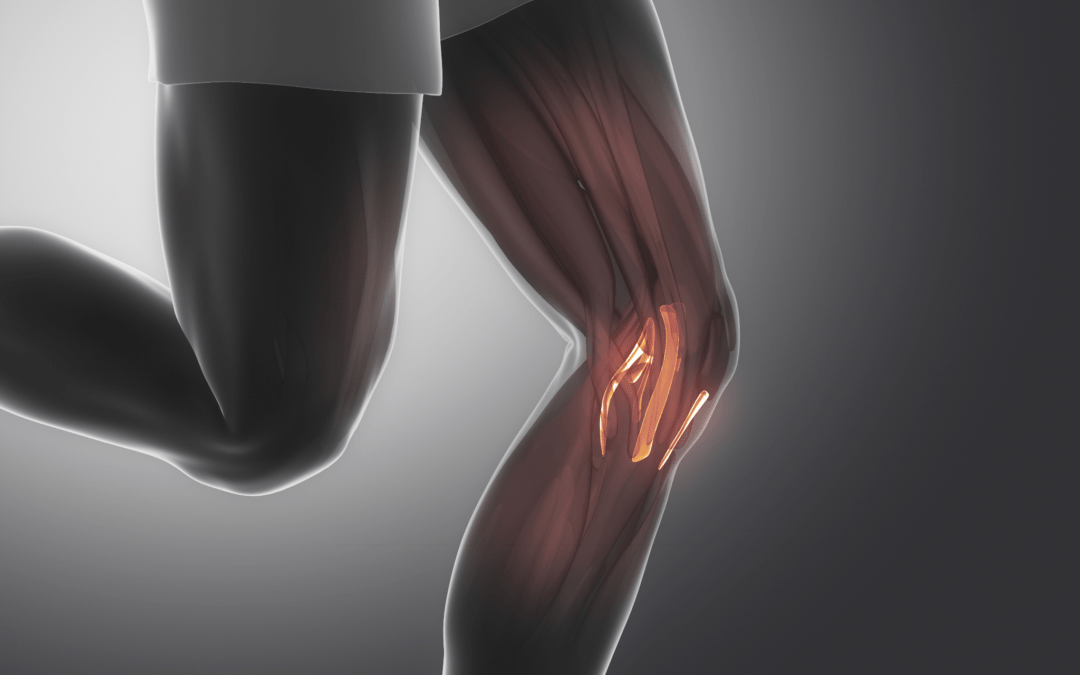
A lot of knee pain involves connective tissue. Connective tissue includes the structures that support, stabilize, and connect different parts of the knee. Ligaments, tendons, cartilage, fascia, and the meniscus all play a role in how the knee moves and handles load. When these tissues are irritated, strained, degenerative, or overloaded, knee pain can become persistent and frustrating.
The good news is that connective tissue knee pain is not always a sign that something is permanently damaged. Many knee issues improve with the right diagnosis, smart load management, physical therapy, strength training, and, when appropriate, regenerative medicine options that support healing and tissue recovery.
The key is understanding which tissue is involved and why it became painful in the first place.
What Is Connective Tissue In The Knee?
Connective tissue is the support system of the knee. It helps hold the joint together, absorb force, guide movement, and transfer load between muscles and bones.
In the knee, connective tissue includes several important structures.
Ligaments connect bone to bone. They help stabilize the knee and prevent excessive motion. The ACL, PCL, MCL, and LCL are all ligaments.
Tendons connect muscle to bone. The quadriceps tendon and patellar tendon help you straighten the knee, jump, climb stairs, squat, and run.
Cartilage helps cushion and protect the joint surface. It allows smoother movement between the bones.
The meniscus is a special type of cartilage that helps absorb shock, distribute load, and improve knee stability.
Fascia surrounds and supports muscles and other tissues, helping with movement and force transfer.
When one of these tissues is irritated or injured, the pain may simply feel like “knee pain.” That is why a proper evaluation matters. The same symptom can come from very different structures.
Why Connective Tissue Knee Pain Happens
Connective tissue pain often comes from a mismatch between load and capacity. In plain language, the tissue is being asked to handle more stress than it can currently tolerate.
That stress can happen suddenly or gradually.
A sudden injury might happen during a twist, fall, pivot, or awkward landing. This can affect ligaments, the meniscus, or tendons.
A gradual injury often builds from repetition. Running, jumping, squatting, hiking, dancing, pickleball, tennis, or strength training can irritate connective tissue when volume increases too fast or mechanics are not well supported.
Sometimes the pain starts after doing more than usual. A longer run. A tournament weekend. A new workout plan. A return to activity after time off. Other times, it builds slowly because small movement patterns keep placing stress in the same area.
The knee is often the location of pain, but the driver may involve the hips, ankles, feet, or core.
Common Types Of Connective Tissue Knee Pain
Not all connective tissue knee pain behaves the same. Here are some of the most common patterns.
Ligament-Related Knee Pain
Ligaments help keep the knee stable. When a ligament is sprained, stretched, or torn, the knee may feel painful, swollen, unstable, or difficult to trust.
Ligament injuries often happen with a specific moment. A pivot. A collision. A landing. A quick change of direction. Some people hear or feel a pop, but not always.
Mild sprains may improve with protection, rehab, and gradual strengthening. More significant injuries may require imaging and a detailed treatment plan. The right approach depends on which ligament is involved, how severe the injury is, and what activities you want to return to.
Tendon-Related Knee Pain
Tendons are common sources of knee pain in active people. The patellar tendon, located below the kneecap, is often irritated in jumping and running sports. The quadriceps tendon, above the kneecap, can also become painful with repeated loading.
Tendon pain often has a familiar pattern. It may feel stiff at the beginning of activity, warm up as you move, then ache later or the next day. It may flare with stairs, squats, jumping, running hills, or getting up from a chair.
Tendon pain usually does not improve long term with rest alone. Rest can calm symptoms, but the tendon needs progressive strengthening to rebuild capacity.
Meniscus-Related Knee Pain
The meniscus helps absorb shock and distribute pressure inside the knee. Meniscus irritation can happen after a twist or over time with degenerative changes.
Meniscus-related pain may feel like joint line pain, catching, swelling, or discomfort with deep bending and twisting. Some people feel like the knee gets stuck or does not move smoothly.
Not all meniscus findings require surgery. Many people improve with a plan that reduces irritation, improves strength, and restores movement control. However, locking, significant swelling, or repeated catching should be evaluated.
Cartilage-Related Knee Pain
Cartilage helps the joint glide. When cartilage becomes irritated or worn, the knee may feel stiff, achy, swollen, or painful with impact and deeper knee positions.
Cartilage-related pain can show up with activities like running, jumping, stairs, squats, and long periods of standing. It can also feel worse after activity rather than during activity.
Treatment often focuses on reducing excessive joint stress, improving strength around the knee and hip, and building a plan that supports long-term joint health.
Fascia And Soft Tissue Irritation
Sometimes connective tissue irritation is more diffuse. The knee may feel tight, achy, or sensitive without one obvious injury. This can involve fascia, tendon sheaths, or surrounding soft tissue structures.
These issues often respond well to movement assessment, load management, manual therapy when appropriate, and progressive strengthening.
Why Knee Pain Keeps Coming Back
One of the most frustrating parts of connective tissue knee pain is that it can improve, then return as soon as you increase activity.
This usually means the pain calmed down, but the tissue capacity did not fully change.
For example, if your patellar tendon hurts after jumping, taking two weeks off might reduce pain. But if you return to the same jump volume without building tendon strength, the pain often comes back.
If your knee hurts with running, rest may help temporarily. But if hip strength, cadence, ankle mobility, or training volume are still off, the knee may flare again.
If the meniscus or cartilage is irritated, symptoms may settle, but the knee still needs better strength and load control to tolerate activity.
Recovery is not just about making pain disappear. It is about building a knee that can handle your life.
The Role Of The Hips, Ankles, And Core
The knee is the middle joint. It is influenced by what happens above and below it.
If the hip is weak or poorly controlled, the knee may collapse inward during squats, landings, running, or cutting. That can increase stress on the kneecap, tendons, and ligaments.
If the ankle is stiff, the knee may compensate during squats, stairs, and landings. This can shift load to the front of the knee.
If the foot is not controlling motion well, the knee may rotate more than it should.
If the core is not supporting trunk position, the pelvis may shift and increase knee stress during sport.
This is why good knee rehab rarely focuses only on the knee. A thorough plan looks at the entire movement system.
When To Get Knee Pain Evaluated
Some knee pain can be managed with smart rest and gradual strengthening. But certain signs mean it is time to get assessed.
You should consider an evaluation if your knee pain lasts more than 1 to 2 weeks, keeps returning with activity, or limits your ability to walk, run, jump, squat, or play your sport.
You should also get evaluated if you notice swelling, instability, locking, catching, numbness, tingling, or a clear loss of strength.
If the injury happened suddenly with a pop, significant swelling, or trouble bearing weight, it is worth getting checked sooner.
The earlier you understand the source of pain, the easier it is to build the right plan.
How Imaging Helps With Connective Tissue Knee Pain
Imaging is not always the first step, but it can be helpful when the diagnosis is unclear or when symptoms suggest a structural injury.
X-rays can show bone alignment, joint space, and signs of arthritis.
MRI can provide more detail about ligaments, meniscus, cartilage, tendons, and bone stress.
Ultrasound can be useful for evaluating some tendons and guiding certain procedures.
The important thing is that imaging should match the clinical story. Many people have imaging findings that are not painful. Others have pain before major changes show on a scan. Imaging is helpful, but it is not the whole answer.
A good sports medicine evaluation combines history, exam findings, movement assessment, and imaging when needed.
Treatment For Connective Tissue Knee Pain
The best treatment depends on the tissue involved. But most successful plans include a few key principles.
Calm The Irritation First
When connective tissue is irritated, the first goal is to reduce the load that keeps poking it. This does not always mean complete rest.
It might mean shorter runs, fewer jumps, lower training volume, less deep knee bending, or more rest between intense sessions.
The goal is to reduce the flare while keeping you moving in ways your knee can tolerate.
A helpful guide is the next-day check. If an activity makes your knee significantly worse the next morning, the load was too high. If symptoms stay mild and settle within 24 hours, the load may be manageable.
Rebuild Strength Gradually
Connective tissue responds to progressive load. That means strength work is often central to recovery.
For tendon pain, this might include isometrics, slow strength training, and gradual return to plyometrics or running.
For ligament recovery, strength training helps restore stability and confidence.
For meniscus and cartilage irritation, strength can reduce joint stress by improving shock absorption and movement control.
A strong knee needs support from the quads, hamstrings, glutes, calves, and core.
Restore Mobility Where It Matters
Mobility can help, but it should be targeted. Not everyone needs the same stretches.
Some people need better ankle mobility. Some need hip rotation. Some need quadriceps flexibility. Some need improved soft tissue tolerance after swelling or guarding.
The goal is not to become more flexible everywhere. The goal is to restore the movement needed for your sport and daily activities without overloading the knee.
Improve Movement Mechanics
If your knee pain shows up during running, jumping, squatting, or cutting, mechanics matter.
This might include landing mechanics, running cadence, squat control, hip stability, or sport-specific movement patterns.
Small changes can reduce stress quickly, but they work best when paired with strength.
Return To Activity In Stages
One of the most common mistakes is returning too fast once pain improves.
Pain relief is not the same as tissue readiness.
A better return looks like gradual steps. Walk before run. Strength before jump. Controlled drills before full sport. Lower volume before higher intensity.
This is how you prevent the rest, flare, repeat cycle.
Can Regenerative Medicine Help Connective Tissue Knee Pain?
For some people, regenerative medicine may be considered as part of a comprehensive plan, especially when connective tissue pain is persistent and not improving with standard care alone.
Options like PRP, stem cell-based therapies, or other regenerative approaches may be discussed depending on the diagnosis, tissue involved, severity, and goals.
These treatments are not magic shortcuts. They work best when the right diagnosis is made and when they are paired with rehab that helps the tissue tolerate load again.
The question is not simply, “Can this treatment help knee pain?” The better question is, “Is this the right treatment for this tissue, at this stage, for this person?”
Recovery Timeline For Connective Tissue Knee Pain
Recovery depends on the tissue, severity, and how long the pain has been present.
A mild tendon irritation may improve in a few weeks with smart load changes and strength work.
A ligament sprain may take longer depending on severity and stability.
Meniscus and cartilage irritation can vary widely, especially depending on swelling, mechanical symptoms, and activity goals.
Chronic connective tissue pain often takes longer because the tissue needs time to remodel and rebuild tolerance.
The goal is not to rush. The goal is to make steady progress that lasts.
How To Prevent Connective Tissue Knee Pain
Prevention is about capacity.
Strength train consistently, especially the quads, hamstrings, glutes, calves, and core.
Increase activity gradually. Sudden spikes in running, jumping, hiking, dancing, or court sports often trigger connective tissue pain.
Warm up before intense activity. The knee does better when the hips, ankles, and muscles are ready.
Build recovery into your schedule. Sleep, nutrition, rest days, and stress management affect tissue healing.
Pay attention to early signals. Stiffness, swelling, or pain that lingers into the next day is information. Adjust before it becomes a bigger issue.
Connective Tissue Knee Care At Avid Sports Medicine
Connective tissue knee pain can feel complicated, but you do not have to figure it out alone. At Avid Sports Medicine in San Francisco, we help active people identify what is actually driving their knee pain, whether it involves tendons, ligaments, cartilage, meniscus, or surrounding soft tissue. Our team combines sports medicine evaluation, individualized physical therapy, movement assessment, and performance-based strength programming to help you reduce pain, rebuild capacity, and return to the activities you love.
Avid Sports Medicine also offers regenerative medicine options, including PRP and stem cell-based therapies when appropriate, as part of a comprehensive plan for stubborn connective tissue and joint conditions. Ready to understand your knee pain and build a plan that supports long-term recovery? Schedule an appointment with Avid Sports Medicine today and let’s get you moving with confidence.
FAQ: Connective Tissue Knee Pain
What Is Connective Tissue Knee Pain?
Connective tissue knee pain refers to pain involving structures like ligaments, tendons, cartilage, meniscus, or fascia. These tissues support stability, movement, and load absorption in the knee.
Can Connective Tissue In The Knee Heal?
Some connective tissue injuries can heal with the right plan, while others need longer-term management. Healing depends on the tissue involved, severity, blood supply, and whether load is managed well.
How Do I Know If Knee Pain Is Tendon Or Ligament?
Tendon pain often builds gradually and flares with repeated loading like jumping or stairs. Ligament pain often follows a sudden twist, pivot, or instability event. An evaluation can clarify the source.
Does Knee Connective Tissue Pain Require Surgery?
Not always. Many tendon, ligament, meniscus, and cartilage-related knee issues improve with physical therapy, strength training, and load management. Some severe injuries may need surgical consultation.
Can PRP Help Knee Connective Tissue Pain?
PRP may be considered for certain tendon, ligament, or joint conditions when appropriate. It works best when the diagnosis is clear and the treatment is paired with a structured rehab plan.
What Makes Connective Tissue Knee Pain Worse?
Sudden activity spikes, poor recovery, weak hips or quads, limited ankle mobility, and returning to sport too quickly can all worsen connective tissue knee pain.
When Should I See A Specialist For Knee Pain?
Get evaluated if pain lasts more than 1 to 2 weeks, keeps returning, causes swelling or instability, or limits walking, running, jumping, or sport.