
Key Takeaways
- Lacrosse injuries often come from cutting, dodging, contact, stick checks, shooting, sprinting, and fatigue.
- Common injury areas include the ankle, knee, hand, wrist, shoulder, hip, groin, hamstring, back, head, and face.
- Prevention should focus on strength, deceleration, ankle and knee control, shoulder endurance, equipment fit, and recovery.
- Avid Sports Medicine supports lacrosse recovery with sports medicine evaluation, physical therapy, movement assessment, strength programming, and advanced options when appropriate.
Lacrosse is fast, physical, and technical all at once.
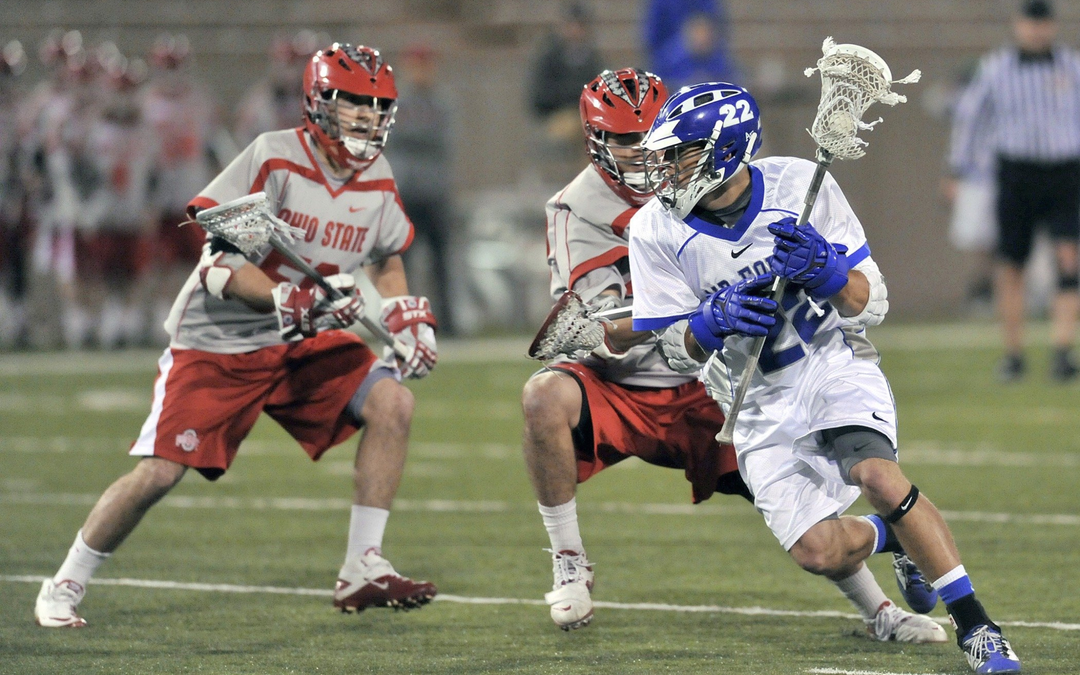
Players sprint down the field, cut sharply, cradle the stick, pass, shoot, defend, dodge, absorb contact, and react to the ball in seconds. The sport asks for speed like soccer, hand control like hockey, overhead power like throwing sports, and contact readiness like field sports.
That combination is exciting. It is also why lacrosse injuries can affect so many different parts of the body.
Some injuries happen in a clear moment. A player rolls an ankle while cutting, takes contact during a dodge, gets hit by a stick, lands awkwardly, or twists the knee during a fast change of direction. Other injuries build gradually. A shoulder gets sore from repeated shooting. A hip tightens from sprinting and cutting. A wrist or hand becomes irritated from repeated checks and stick handling.
The key to staying healthy in lacrosse is not avoiding hard play. It is preparing the body for the demands of the sport, recognizing early symptoms, and getting the right care when pain starts changing movement.
Why Lacrosse Injuries Are Different
Lacrosse is not one movement repeated over and over. It is a mix of many movement demands layered together.
A midfielder may sprint, stop, dodge, pass, shoot, defend, and repeat that cycle many times in one game. An attacker may cut repeatedly while absorbing defensive pressure. A defender may check, backpedal, rotate, and react to quick changes. A goalie may move explosively in short bursts and take high-speed shots to protected or unprotected areas.
This variety makes lacrosse athletes well-rounded, but it also means the body needs strength and control in many directions.
Straight-line speed is helpful, but it is not enough. Lacrosse also requires deceleration, lateral control, rotational power, balance, shoulder endurance, hand protection, trunk stability, and the ability to stay coordinated under fatigue.
When one of those pieces is missing, injuries become more likely.
Lower Body Injuries: The Cutting And Dodging Problem
The lower body takes a lot of stress in lacrosse because the sport is built around quick direction changes.
Players cut to get open, dodge defenders, plant to shoot, backpedal on defense, and accelerate from awkward positions. These movements place high demand on the ankles, knees, hips, and calves.
Lower extremity injuries are a major part of lacrosse injury patterns, and NCAA men’s lacrosse injury data from 2014 to 2019 found that lower extremity injuries accounted for the greatest proportion of reported injuries, with sprains and strains among the most common diagnoses.
Ankle Sprains In Lacrosse
Ankle sprains are one of the most common lacrosse injuries because the sport requires fast cutting, uneven field reactions, and contact around the feet.
A player may roll the ankle while dodging, land on another player’s foot, or lose balance after contact. The ankle may swell, feel tender, and become painful with weight bearing.
The mistake is thinking that once walking feels normal, the ankle is ready for lacrosse. Walking is only the first step. Lacrosse requires sprinting, cutting, defensive slides, backpedaling, and fast reactions.
A complete ankle recovery plan should include mobility, calf strength, balance, single-leg control, lateral movement, and sport-specific drills before full return.
Knee Injuries In Lacrosse
Knee injuries in lacrosse can happen during non-contact cutting, twisting, contact, or awkward landing.
The knee may be irritated from a sudden movement, or it may develop pain over time from repeated running, deceleration, and shooting mechanics. Common issues include ligament sprains, meniscus irritation, kneecap pain, patellar tendon pain, and ACL-related injuries.
Non-contact ankle and knee ligament sprains sustained while cutting and dodging are commonly noted in both boys’ and girls’ lacrosse.
Warning signs include swelling, giving way, locking, catching, sharp pain, or difficulty trusting the knee. These symptoms should not be ignored, especially after a twist or sudden stop.
Hip, Groin, And Thigh Strains
Lacrosse players rely heavily on the hips and thighs for acceleration, dodging, shooting, and defensive positioning. Strains can happen when the athlete sprints, cuts, reaches, or rotates at high speed.
Hip flexor, adductor, quad, and hamstring strains may show up as sharp pain, tightness, weakness, or discomfort with sprinting and changing direction.
These injuries often need more than rest. Rehab should rebuild strength, mobility, and speed tolerance. If the player returns before the tissue is ready for sprinting and cutting, the strain can come back quickly.
Hand, Wrist, And Finger Injuries
The hands and wrists are highly exposed in lacrosse.
Even with gloves, players can experience stick checks, ball impact, falls, awkward grip forces, and contact during play. Hand and wrist injuries can include sprains, contusions, fractures, tendon irritation, and finger injuries.
A review of lacrosse-related musculoskeletal injuries identified the hand and wrist as key acute injury sites, along with the ankle and knee. Recent upper-extremity lacrosse injury data also suggests that stick and body contact are important drivers of upper-extremity trauma.
Players should take hand injuries seriously if there is swelling, bruising, deformity, loss of motion, numbness, or pain with gripping the stick. Taping and playing through pain can turn a small issue into a longer problem if the injury is more than a simple bruise.
Shoulder Pain From Shooting, Passing, And Contact
The lacrosse shoulder has two big jobs. It has to create power during passing and shooting, and it has to tolerate contact during play.
Repeated shooting can irritate the rotator cuff, shoulder blade muscles, or the front of the shoulder. Contact can cause sprains, contusions, instability episodes, or AC joint irritation.
Shoulder pain may start as soreness after games or practice. It may become pain with shooting, reaching overhead, checking, or lifting. If the shoulder feels weak, unstable, or painful after a fall or collision, it should be evaluated.
A strong shoulder plan should include rotator cuff endurance, shoulder blade control, thoracic mobility, trunk rotation, and gradual return to shooting volume.
Head, Face, And Concussion Concerns
Head and face injuries can occur in lacrosse from collisions, falls, ball contact, or stick contact. Concussions are especially important because symptoms may not always be obvious right away.
Women’s lacrosse injury data from a 15-year review found that head injuries represented a substantial proportion of injuries in that study sample, and strain or sprain diagnoses were also common.
Possible concussion symptoms include headache, dizziness, confusion, nausea, balance problems, vision changes, light sensitivity, feeling slowed down, or difficulty concentrating. A player with suspected concussion symptoms should be removed from play and evaluated. They should not return the same day.
Back And Core-Related Pain
Lacrosse players rotate constantly. Passing, shooting, defending, sprinting, and absorbing contact all require trunk control.
Low back pain can develop when the hips, core, and thoracic spine are not sharing the work well. Shooting mechanics may place repeated rotational stress through the spine. Defensive posture can also fatigue the back and hips over time.
Back pain in lacrosse is not always from one dramatic injury. It can build from repeated rotation, poor recovery, weak trunk endurance, or limited hip mobility.
Treatment should look at the whole chain, not only the low back.
Overuse Injuries During The Season
Not every lacrosse injury happens from a hit, fall, or twist. Many develop during the season as practice, games, tournaments, conditioning, and strength training stack together.
Common overuse patterns include shoulder soreness, patellar tendon pain, hip tightness, shin irritation, ankle stiffness, and low back tightness.
Overuse injuries usually begin as mild symptoms. The player can still perform, so they keep going. Then the pain becomes more predictable, more limiting, and harder to ignore.
The earlier the athlete adjusts load and starts targeted rehab, the easier it is to prevent a small issue from becoming a season-long problem.
Why Fatigue Changes Injury Risk
Fatigue is a major factor in lacrosse because the sport demands repeated high-intensity efforts.
When players get tired, cutting mechanics can change. Knees may collapse inward. Ankles may lose control. The trunk may lean more. Shoulder mechanics may become less efficient. Reaction time may slow.
That is when injuries often happen.
This is why conditioning should not only mean running more. Athletes need strength endurance, sprint repeatability, deceleration control, balance, and sport-specific conditioning.
A tired athlete with good movement control is better prepared than a fast athlete who loses control late in the game.
What To Do When Pain Shows Up
Pain during lacrosse should be interpreted based on severity and pattern.
Mild soreness that improves and does not change movement may be monitored. Sharp pain, swelling, instability, weakness, limping, head injury symptoms, or pain that changes performance should be taken seriously.
After practice or a game, check how the body responds the next day. If the ankle is swollen, the knee feels unstable, the shoulder hurts with normal reaching, or the hamstring feels tight and weak, reduce activity and get assessed if symptoms persist.
Pushing through pain can make recovery longer, especially when the injury involves ligaments, tendons, joints, or head symptoms.
How Physical Therapy Helps Lacrosse Players
Physical therapy helps lacrosse players recover in a way that matches the sport.
For ankle sprains, rehab should progress from walking to balance, lateral control, cutting, and field drills.
For knee injuries, rehab should include strength, landing mechanics, deceleration, and return-to-cutting progressions.
For shoulder injuries, treatment should address rotator cuff endurance, shoulder blade control, trunk rotation, and shooting volume.
For hip, groin, and hamstring strains, rehab should rebuild strength at different speeds and prepare the athlete for sprinting and dodging.
For recurring injuries, physical therapy can identify movement patterns, weakness, mobility limits, or workload issues that keep creating flare-ups.
The goal is not just pain relief. The goal is to return with better movement and lower reinjury risk.
How To Reduce Lacrosse Injury Risk
Lacrosse injury prevention should match the sport’s demands.
Players need lower body strength for sprinting, cutting, and deceleration. Quads, hamstrings, glutes, calves, and foot muscles all matter.
They need ankle and knee control for dodging and landing.
They need shoulder and trunk strength for passing, shooting, and contact.
They need hand and wrist protection, plus proper equipment fit.
They need a warm up that includes progressive sprinting, lateral movement, rotation, stick work, and controlled cutting.
They need recovery during heavy game weeks and tournament weekends.
Most importantly, they need to treat small issues early. A sore ankle, stiff knee, tight groin, or painful shoulder is easier to manage before it becomes a major limitation.
Lacrosse Injury Care At Avid Sports Medicine
Lacrosse injuries can affect every part of an athlete’s game, from sprinting and cutting to shooting, defending, and stick control. At Avid Sports Medicine in San Francisco, we help active people recover from lacrosse injuries with a plan that matches the demands of the sport.
Our team offers sports medicine evaluation, individualized physical therapy, movement assessment, gait analysis when appropriate, manual therapy, and performance-based strength programming. We help with ankle sprains, knee injuries, hip and groin strains, shoulder pain, hand and wrist injuries, low back pain, and return-to-play planning.
For stubborn tendon, joint, and soft tissue conditions, Avid Sports Medicine can also discuss advanced options such as shockwave therapy, PRP, and stem cell-based therapies when appropriate. Ready to return to the field with strength, speed, and confidence? Schedule an appointment with Avid Sports Medicine today and let’s build a recovery and performance plan for your game.
FAQ: Lacrosse Injuries
What Are The Most Common Lacrosse Injuries?
Common lacrosse injuries include ankle sprains, knee injuries, hand and wrist injuries, shoulder pain, hip and groin strains, hamstring strains, low back pain, and head or face injuries.
Why Are Ankle Injuries Common In Lacrosse?
Ankle injuries often happen during cutting, dodging, landing, backpedaling, or contact around the feet. The sport requires fast changes of direction, which places high demand on ankle control.
Can Lacrosse Cause Knee Injuries?
Yes. Knee injuries can happen during twisting, sudden stops, cutting, awkward landings, or contact. Swelling, instability, locking, or giving way should be evaluated.
Why Do Lacrosse Players Get Shoulder Pain?
Shoulder pain may come from repeated shooting and passing, contact, falls, or poor shoulder blade and trunk control. Persistent pain or weakness should be assessed.
Are Hand And Wrist Injuries Common In Lacrosse?
Yes. Stick checks, ball impact, falls, and grip demands can lead to hand, wrist, and finger injuries. Swelling, deformity, or loss of motion should not be ignored.
How Can Lacrosse Players Prevent Injuries?
Players can reduce risk with strength training, proper warm ups, ankle and knee control, shoulder endurance, mobility work, equipment fit, and smart recovery during the season.
How Does Physical Therapy Help Lacrosse Injuries?
Physical therapy helps restore strength, mobility, balance, movement mechanics, and sport-specific readiness so players can return safely and reduce reinjury risk.