
Key Takeaways
- Shockwave therapy equipment delivers controlled acoustic pressure waves to targeted tissue as a noninvasive treatment option.
- The equipment settings, energy type, treatment area, and provider skill all influence how shockwave therapy is applied.
- Shockwave therapy may support pain relief and tissue-healing responses, especially in certain chronic tendon and soft tissue conditions.
- Avid Sports Medicine uses shockwave therapy as part of a broader plan that may include physical therapy, movement assessment, strength programming, and regenerative options when appropriate.
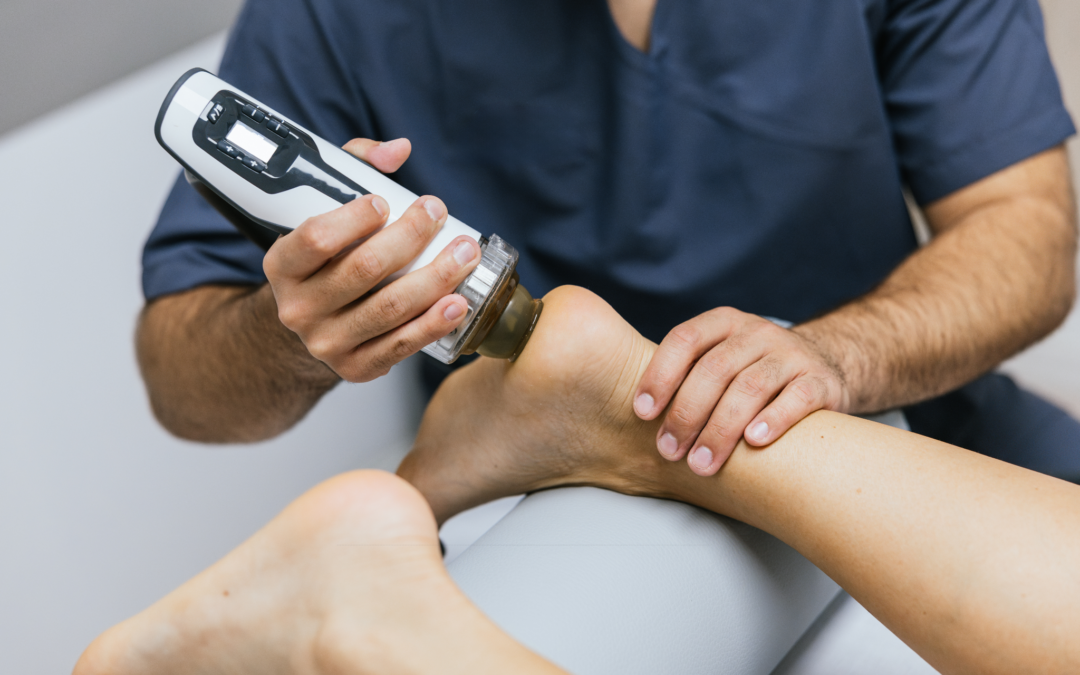
In a sports medicine setting, shockwave therapy is a noninvasive treatment that uses controlled acoustic energy to stimulate irritated tissue. There are no incisions, no stitches, and no long procedure room setup. A trained provider applies a handheld device to the treatment area, adjusts the settings, and delivers pulses of mechanical energy through the skin.
The equipment matters because shockwave therapy is not just “a machine that vibrates.” Different devices create different types of energy. Different settings change how deeply that energy travels. Different treatment areas require different clinical decisions. And most importantly, the equipment works best when it is used as part of a complete recovery plan, not as a stand-alone shortcut.
For patients dealing with chronic tendon pain, plantar fasciitis, Achilles pain, patellar tendon pain, tennis elbow, golfer’s elbow, or other stubborn soft tissue issues, shockwave therapy may be one option worth discussing. But before choosing it, it helps to understand what shockwave therapy equipment does, how treatment feels, and why the provider’s assessment matters as much as the device itself.
What Is Shockwave Therapy Equipment?
Shockwave therapy equipment is designed to generate acoustic pressure waves and deliver them into targeted tissues. These waves create a mechanical stimulus that may help reduce pain and support tissue repair processes.
In a clinic, the equipment usually includes a main control unit and a handheld applicator. The provider uses the control unit to adjust treatment settings, then places the applicator over the area being treated. A gel is often used on the skin to help transmit the acoustic energy more effectively.
The machine delivers pulses in a controlled rhythm. Patients may feel tapping, pressure, pulsing, or discomfort depending on the area, the settings, and how sensitive the tissue is. The treatment is usually brief, but the details depend on the diagnosis and the provider’s protocol.
The goal is not to “blast” the tissue. The goal is to apply the right dose of mechanical energy to the right area for the right reason.
How Does Shockwave Therapy Equipment Work?
Shockwave therapy equipment works by converting energy from the machine into acoustic waves. Those waves travel through the skin and into the targeted tissue.
Once the energy reaches the treatment area, it creates a mechanical stimulus. Research often describes this concept as mechanotransduction, which means cells respond to mechanical forces by changing biological activity. In simpler terms, the tissue receives a physical signal that may help encourage a healing response.
Shockwave therapy may also help with pain through nervous system effects. Cleveland Clinic Canada describes one proposed pain-relief mechanism as local nerve stimulation that can recalibrate pain perception over time.
This is why shockwave therapy is often used for stubborn tendon and soft tissue issues that have not responded fully to rest, stretching, or basic home care. The goal is to help restart or support a healing process in tissue that has become irritated, sensitive, or slow to recover.
Focused Vs Radial Shockwave Equipment
Not all shockwave therapy equipment is the same. Two common categories are focused shockwave and radial shockwave.
Focused shockwave equipment directs energy more precisely into a smaller, deeper target area. It is often discussed for deeper tissues or more specific treatment zones.
Radial shockwave equipment spreads energy more broadly and is often used for more superficial tissue areas. The energy disperses as it moves away from the applicator.
Both types may have a role in musculoskeletal care. The right choice depends on the condition, tissue depth, treatment goals, and the provider’s clinical judgment.
This is one reason patients should avoid thinking only in terms of “Does the clinic have shockwave?” A better question is, “Is this the right type of shockwave treatment for my condition, and is it being used as part of a complete plan?”
What The Settings Actually Mean
Shockwave therapy equipment allows the provider to adjust treatment variables. These may include energy level, number of pulses, frequency, treatment area, and applicator choice.
Energy level affects how strong the pulses feel and how much mechanical stimulus is delivered.
Pulse count refers to how many pulses are delivered during a session.
Frequency refers to how quickly the pulses are delivered.
Treatment area matters because some conditions require direct treatment over the painful tissue, while others may require treatment around related muscle or tendon regions.
Applicator choice may influence how energy is delivered to the tissue.
These details should be based on assessment, not guesswork. More intensity is not always better. A sensitive tendon or painful foot may need a different approach than a deeper hip or chronic Achilles issue.
The best shockwave therapy equipment is only useful when the provider knows how to dose it properly.
What Conditions Is Shockwave Therapy Equipment Used For?
Shockwave therapy is commonly discussed for chronic musculoskeletal conditions, especially those involving tendons and tendon attachments. It is a modality used for various musculoskeletal conditions, particularly chronic conditions affecting medium to large tendons and their insertions on bone.
In sports medicine settings, shockwave therapy may be considered for conditions such as plantar fasciitis, Achilles tendinopathy, patellar tendinopathy, tennis elbow, golfer’s elbow, rotator cuff-related tendon pain, and other persistent soft tissue problems.
It may also be discussed when pain has lasted for a long time, when symptoms keep returning after rest, or when a tendon is struggling to tolerate load despite rehab.
Shockwave therapy is not the answer for every injury. It is usually considered after a proper diagnosis and should be matched to the tissue involved.
What Happens During A Shockwave Therapy Session?
A shockwave therapy session usually starts with assessment and positioning. The provider identifies the treatment area, explains what to expect, and applies gel to the skin.
Then the handheld applicator is placed over the targeted area. The machine delivers pulses while the provider may adjust the location or settings based on tissue response and treatment goals.
The sensation can vary. Some people describe it as tapping or pulsing. Others feel discomfort over the most sensitive points. The provider should communicate throughout the session and adjust as needed.
After treatment, patients are usually able to walk out of the clinic. Some soreness can happen afterward, depending on the condition and intensity used.
Because shockwave therapy is meant to create a tissue response, the aftercare matters. Patients are often advised to follow specific activity guidelines from their provider, especially around heavy loading, intense workouts, or sport.
Why Shockwave Therapy Is Not Just Pain Relief
Many people come to shockwave therapy hoping for pain relief, and that is understandable. But the treatment is not meant to simply numb the area.
Shockwave therapy is often used because it may help influence tissue healing, sensitivity, circulation-related responses, and pain signaling. The mechanical energy is intended to stimulate the tissue rather than hide the problem.
That distinction matters.
If pain improves but the original overload pattern remains, symptoms may return. For example, an Achilles tendon may feel better after shockwave, but if calf strength, running volume, hill training, or ankle mechanics are not addressed, the tendon may flare again.
This is why shockwave therapy should be paired with physical therapy, strength work, movement assessment, and load management when appropriate.
What Makes Good Shockwave Therapy Different?
Good shockwave therapy starts before the machine turns on.
A provider should know what diagnosis is being treated, how long symptoms have been present, what activities trigger pain, what treatments have already been tried, and what the patient wants to return to.
The treatment should be targeted. It should be dosed thoughtfully. It should be explained clearly. It should fit into a larger plan.
For sports and active patients, the plan may also include strengthening, gait analysis, footwear guidance, tendon loading, mobility work, running progression, return-to-sport drills, or regenerative medicine discussion when appropriate.
The equipment helps deliver the stimulus. The clinical plan helps turn that stimulus into progress.
Who May Be A Good Candidate?
Shockwave therapy may be considered for people with persistent tendon or soft tissue pain that has not improved with basic care. It may be especially relevant for chronic tendon irritation, tendon insertion pain, plantar fascia pain, or certain sports-related overuse injuries.
A good candidate is not simply someone who has pain. A good candidate is someone whose diagnosis, tissue type, symptoms, and recovery goals match the treatment.
A sports medicine provider can help determine whether shockwave therapy makes sense or whether another approach should come first.
Who Should Be Careful With Shockwave Therapy?
Shockwave therapy is not right for everyone. People who are pregnant, have certain bleeding disorders, use certain blood thinners, have infection or open wounds near the treatment area, have certain nerve or vascular conditions, or have other medical concerns may need to avoid or modify treatment.
The exact safety decision should be made by a qualified medical provider.
This is another reason the evaluation matters. Shockwave therapy equipment should not be used casually or without screening.
How Many Sessions Are Usually Needed?
The number of sessions varies depending on the condition, severity, tissue involved, and patient response.
Some people notice changes after a few sessions. Others improve gradually over several weeks. Chronic tendon conditions often need time because the tissue has to adapt, not just feel temporarily calmer.
A provider may recommend a series of treatments spaced over time, along with a rehab plan. The best timeline should be based on response, function, and goals.
What To Do Between Shockwave Sessions
What happens between sessions can strongly influence results.
Patients may be asked to modify painful activity, avoid sudden training spikes, perform specific physical therapy exercises, and monitor symptoms. Tendon issues often need progressive loading, but the timing and dose should be guided.
For example, someone with patellar tendon pain may need controlled quad loading. Someone with plantar fascia pain may need calf and foot strengthening. Someone with Achilles pain may need a staged return to running and hills.
Shockwave therapy can support the process, but the body still needs the right movement plan.
Why Avid’s Approach Matters
Shockwave therapy equipment is only one part of care. The bigger value comes from knowing when to use it, how to apply it, and how to connect it with rehab.
At Avid Sports Medicine, shockwave therapy can be integrated into a broader sports medicine plan. That may include physical therapy, movement assessment, gait analysis when appropriate, strength programming, and discussion of regenerative options when needed.
This matters because stubborn injuries rarely come from one isolated problem. A painful tendon may be influenced by training volume, weakness, mobility limits, footwear, sport mechanics, or incomplete recovery from a previous injury.
Avid’s goal is not only to treat the sore spot. It is to help active people understand the root contributors and build a plan that supports long-term movement.
Shockwave Therapy At Avid Sports Medicine
If you are curious about shockwave therapy equipment and whether it could help your pain, the first step is not choosing a machine. The first step is choosing the right evaluation.
At Avid Sports Medicine in San Francisco, our team uses sports medicine expertise to determine whether shockwave therapy is appropriate for your condition and how it should fit into your recovery plan. We help patients dealing with stubborn tendon pain, plantar fasciitis, Achilles issues, patellar tendon pain, elbow pain, shoulder tendon irritation, and other persistent soft tissue concerns.
Avid Sports Medicine offers shockwave therapy as part of a comprehensive approach that may include physical therapy, gait and movement assessment, manual therapy, strength programming, and regenerative options when appropriate. Ready to find out whether shockwave therapy belongs in your recovery plan? Schedule an appointment with Avid Sports Medicine today and let’s help you move with less pain and more confidence.
FAQ: Shockwave Therapy Equipment
What Is Shockwave Therapy Equipment?
Shockwave therapy equipment is a medical device that delivers controlled acoustic pressure waves into targeted tissue to stimulate a mechanical response.
How Does Shockwave Therapy Equipment Work?
It converts energy into acoustic waves that travel through the skin into injured or irritated tissue. The mechanical stimulus may help with pain modulation and tissue healing responses.
Is Shockwave Therapy The Same As Ultrasound?
No. Both use energy applied through a device, but they are different technologies with different treatment effects, settings, and clinical uses.
Does Shockwave Therapy Hurt?
Some people feel tapping, pressure, or discomfort during treatment, especially over sensitive tissue. The provider can adjust settings based on tolerance.
What Conditions Can Shockwave Therapy Help?
Shockwave therapy may be considered for chronic tendon and soft tissue conditions such as plantar fasciitis, Achilles tendinopathy, patellar tendinopathy, tennis elbow, golfer’s elbow, and certain shoulder tendon issues.
How Many Shockwave Therapy Sessions Do You Need?
The number of sessions depends on the condition, severity, and response. Many treatment plans involve a series of sessions combined with rehab.
Is Shockwave Therapy Safe?
Shockwave therapy is considered noninvasive, but it is not right for everyone. A medical provider should screen for safety concerns before treatment.
Do I Still Need Physical Therapy With Shockwave Therapy?
Often, yes. Shockwave therapy works best when paired with a plan that addresses strength, mobility, mechanics, and load management.